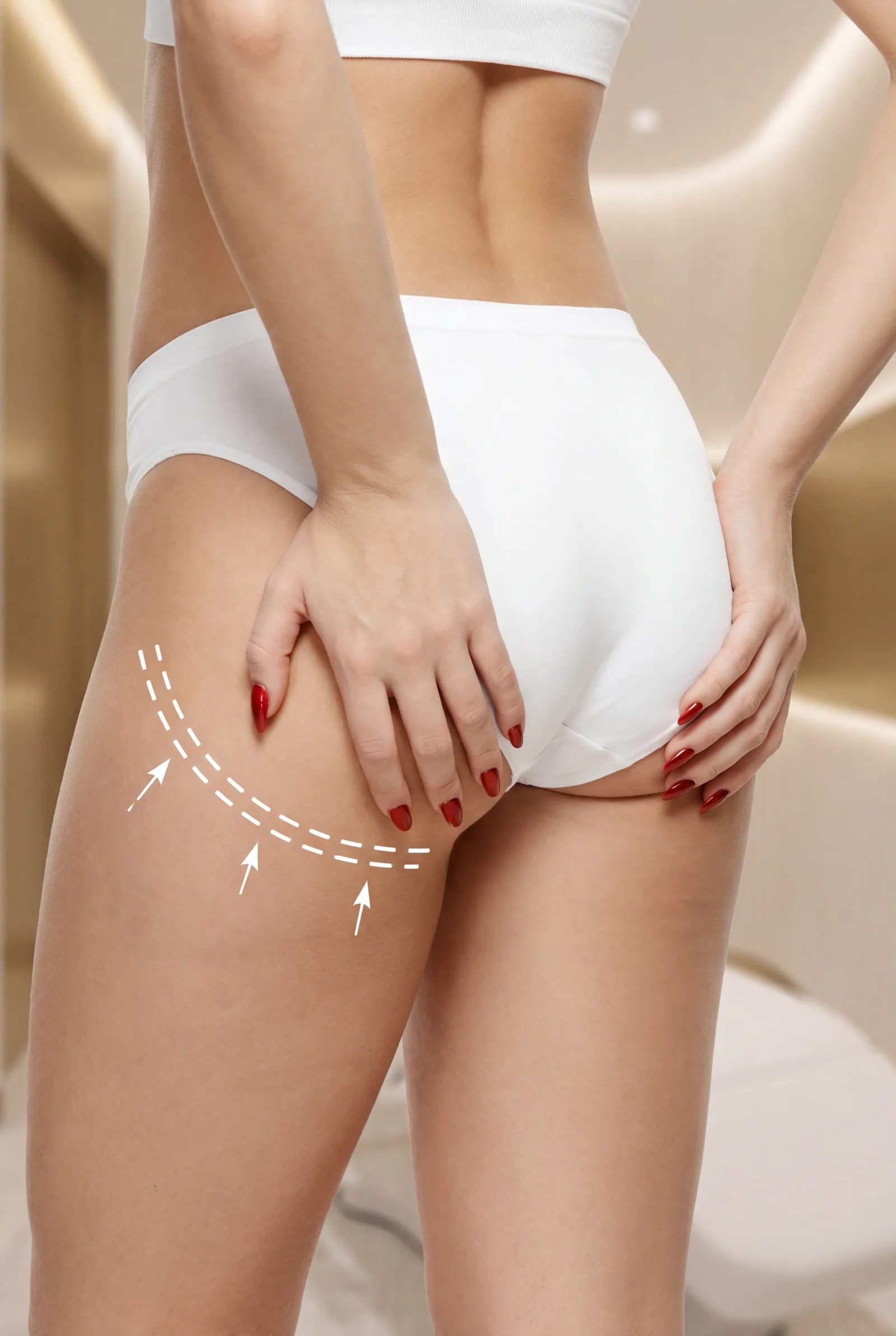
Fat transfer is a three-stage operation performed in one sitting. Fat is harvested by gentle liposuction from a donor area — usually the abdomen, flanks or thighs. It is then purified to separate viable fat cells from blood, oil and anaesthetic fluid. Finally it is injected in fine layers into the area being augmented.
The single most important variable is how much of the transferred fat survives. Grafted fat has no blood supply of its own at first and must establish one from the surrounding tissue, which is why it is placed in many fine passes rather than in one large deposit — every parcel of fat needs to be close enough to living tissue to be fed. Typically 50 to 70 percent survives permanently.
That survival rate is why an experienced surgeon deliberately over-corrects at the time of surgery. The result immediately after the operation is intentionally fuller than the one you will end up with, and it settles over the first three months as the unsurvived portion is reabsorbed. What remains at three months is permanent.