01
Tumescent Liposuction
The standard technique, in which the treatment area is infiltrated with anaesthetic solution before fat is removed through fine cannulas. It remains the workhorse of body contouring and suits most areas and most patients.
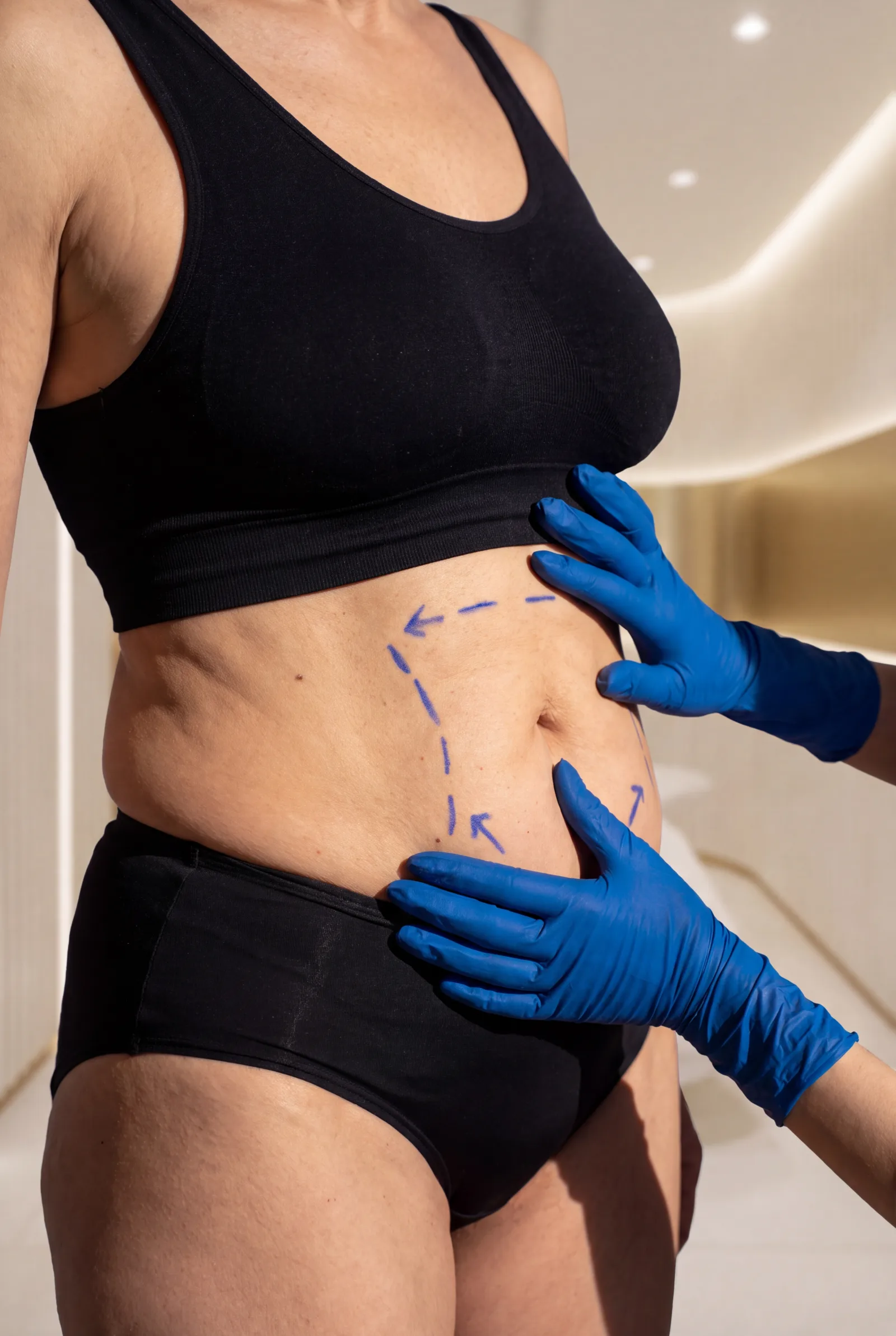
Body Procedure 02 · Liposuction
Not a weight loss procedure — a contouring one. Liposuction removes the localised fat deposits that stay put regardless of how disciplined your diet and training are.
Board-Certified Surgeons
DHA-licensed surgical facility
Contour, Not Weight Loss
Localised resistant deposits only
Multiple Areas Per Session
Within safe operating limits
Honest Skin Assessment
Elasticity judged before you book
In Short
Liposuction removes localised fat deposits through small incisions using a thin cannula, reshaping contour in areas that resist diet and exercise. It is a body contouring procedure, not a weight loss treatment — the best candidates are already near their stable weight. Common areas include the abdomen, flanks, thighs, arms, back, bra line and under the chin. Most patients return to desk work within three to seven days.
The Procedure
Liposuction removes fat through a thin hollow tube called a cannula, inserted through incisions of three to five millimetres. The area is first infiltrated with a tumescent solution that numbs the tissue, constricts blood vessels and makes the fat easier to remove, which is why modern liposuction bruises far less than the procedure did twenty years ago.
The critical thing to understand is what it is for. Liposuction addresses localised deposits that are resistant to diet and exercise — the flanks that persist at any weight, the outer thigh, the pocket under the chin. It is not a treatment for obesity, and it does not tighten loose skin. Patients whose main issue is skin laxity need a tummy tuck or a lift, not liposuction.
Results depend heavily on skin quality. Skin with good elasticity retracts smoothly over the new contour; skin that has lost elasticity through age, pregnancy or major weight loss may not. Your surgeon assesses this at consultation, because it determines whether liposuction alone will give you the result you are picturing.
Techniques & Options
01
The standard technique, in which the treatment area is infiltrated with anaesthetic solution before fat is removed through fine cannulas. It remains the workhorse of body contouring and suits most areas and most patients.
02
Ultrasound or mechanical energy loosens fat before removal, which reduces surgical effort in dense or fibrous areas such as the male chest, back and upper abdomen. It also allows more precise superficial work where definition rather than debulking is the goal.
03
Circumferential treatment of the abdomen, flanks and back in one session to reshape the waist as a whole rather than a single flat plane. Where anatomy and body fat allow, superficial sculpting can emphasise the natural muscular shadows beneath.
Candidacy
01
Areas are assessed standing, since fat distribution changes when lying down, and skin elasticity is pinch-tested. Treatment zones are marked on your body before you enter theatre.
02
Sedation with local anaesthetic for smaller single areas; general anaesthetic for larger or multiple-area sessions.
03
The area is infiltrated with a solution that numbs tissue and constricts blood vessels, substantially reducing bleeding and bruising.
04
Fat is removed through small incisions using cannulas of varying diameter, working in a crosshatch pattern from multiple angles so the result is even rather than grooved.
05
Finer cannulas are used to feather the edges of each treated zone into the untreated tissue around it, which is what prevents visible steps and shelves.
06
A compression garment is fitted immediately and worn continuously for the first weeks to control swelling and support skin retraction.
Options Compared
Swipe to see more
| Liposuction | Tummy Tuck | Non-Surgical Fat Reduction | |
|---|---|---|---|
| Removes fat | Yes, substantially | Yes, with skin | Modestly, over months |
| Removes loose skin | No | Yes | No |
| Repairs separated muscle | No | Yes | No |
| Anaesthetic | General or sedation | General | None |
| Back to work | 3–7 days | 2–3 weeks | Same day |
| Sessions | One | One | Multiple |
| Best for | Localised deposits, good skin | Loose skin and muscle separation | Small, mild deposits |
The Honest View
Liposuction is surgery and carries risks including bleeding, infection, fluid collection, temporary numbness and contour irregularity. It does not tighten loose skin, and results depend significantly on skin elasticity. Remaining fat cells can still enlarge with future weight gain, so a stable weight is what protects the result. Your surgeon will discuss all of this and assess your skin quality honestly at consultation.
Recovery
Days 1–3
Swelling, bruising and soreness peak. The compression garment stays on continuously and gentle walking is encouraged.
Days 4–7
Discomfort eases and most patients return to desk work. Bruising begins to change colour.
Weeks 2–4
Bruising resolves. Swelling remains and can make the area feel firm — this is normal and temporary.
Weeks 4–6
Compression garment is reduced or discontinued. Gradual return to full exercise begins.
Months 2–3
Firmness softens and the true contour becomes visible for the first time.
Months 3–6
Final contour, with residual swelling fully resolved and skin retraction complete.
Google Reviews
Very friendly and professional.
— Alireza Mahmoudian, Verified Google Review
No, and this is the most important thing to be clear about. Liposuction reshapes contour by removing localised deposits; it is not a treatment for excess weight. The best candidates are already close to a stable target weight and are bothered by specific areas that will not respond to diet or training.
The fat cells removed do not regenerate in the treated area. However, the fat cells that remain can still enlarge if you gain weight, and fat may then distribute differently across your body. A stable weight is what preserves the result.
No. Skin retracts over the new contour only to the extent its elasticity allows. If you have significant loose skin, liposuction alone will not address it and may make it more apparent — a tummy tuck or lift is the appropriate procedure. Your surgeon will tell you honestly which category you fall into.
Several, commonly the abdomen, flanks and back together as a circumferential treatment. The limit is set by total volume removed and safe operating time rather than by the number of zones, and your surgeon will advise what is safe in a single session.
Most patients describe it as a deep muscular soreness, similar to an intense workout, rather than sharp pain. It is generally manageable with prescribed pain relief for the first three to five days.
It controls swelling, supports the tissue as it heals into its new contour, and encourages skin retraction. Wearing it consistently for the first four to six weeks makes a measurable difference to the smoothness of the final result.
You will see a change immediately, but swelling obscures the true contour for weeks. The area softens at two to three months, and the final result is assessed at three to six months.
A consultation with a board-certified plastic surgeon: your deposits assessed standing, your skin elasticity tested, and an honest answer about whether contouring alone will give you the result you are picturing.