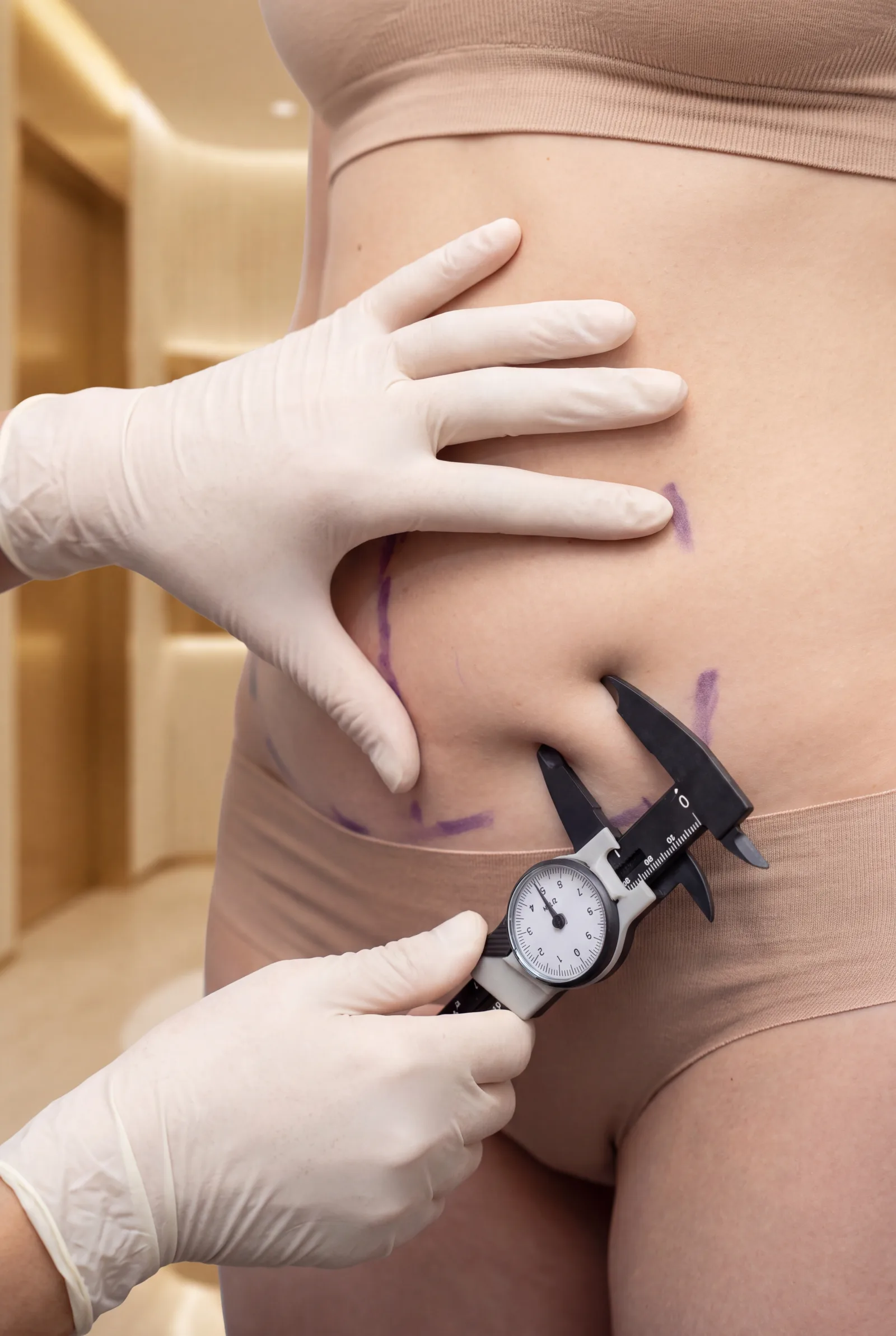
An abdominoplasty does two things that no non-surgical treatment can. It removes the apron of stretched skin that remains after pregnancy or major weight loss, and it repairs the separation between the vertical abdominal muscles that pregnancy commonly causes.
That second element is the one patients underestimate. Diastasis recti is a stretching of the connective tissue between the two halves of the rectus abdominis, not a weakness of the muscles themselves. This is why a genuinely fit patient can still have a rounded lower abdomen that will not flatten — the core is strong, but the fascia holding it together has given way. Only sutures bring it back.
A full abdominoplasty treats the whole abdomen through a low horizontal incision, repositioning the navel as the skin is redraped. A mini tummy tuck uses a shorter incision and treats only the area below the navel, suiting patients whose laxity is limited to the lower abdomen. Liposuction of the flanks is very commonly added to complete the waistline.