Face Procedure 13 · Face Lift

Face Lift in Dubai

A face lift that pulls skin looks like a face lift. One that repositions the deeper tissue layer looks like you, rested. The difference is the technique — and it is the whole conversation.

Board-Certified Surgeons

DHA-licensed surgical facility

Deep Plane Technique

The SMAS repositioned, not skin pulled

Incisions in Natural Creases

Hairline and around the ear, planned to sit in shadow

Rested, Not Tightened

Skin redraped without tension

In Short

A face lift, or rhytidectomy, repositions the deeper tissue layers of the face — the SMAS — to correct jowling, midface descent and neck laxity. Modern deep plane and SMAS techniques lift and reposition this layer rather than pulling on skin, which is what produces a natural, unstretched result. Incisions follow the hairline and the natural creases around the ear. Most patients return to social activity within two to three weeks.

Anaesthetic
General
Procedure time
3–5 hours
Hospital stay
1 night
Back to work
2–3 weeks
Swelling settles
6–8 weeks
Final result
6–12 months

The Procedure

What Is a Face Lift?

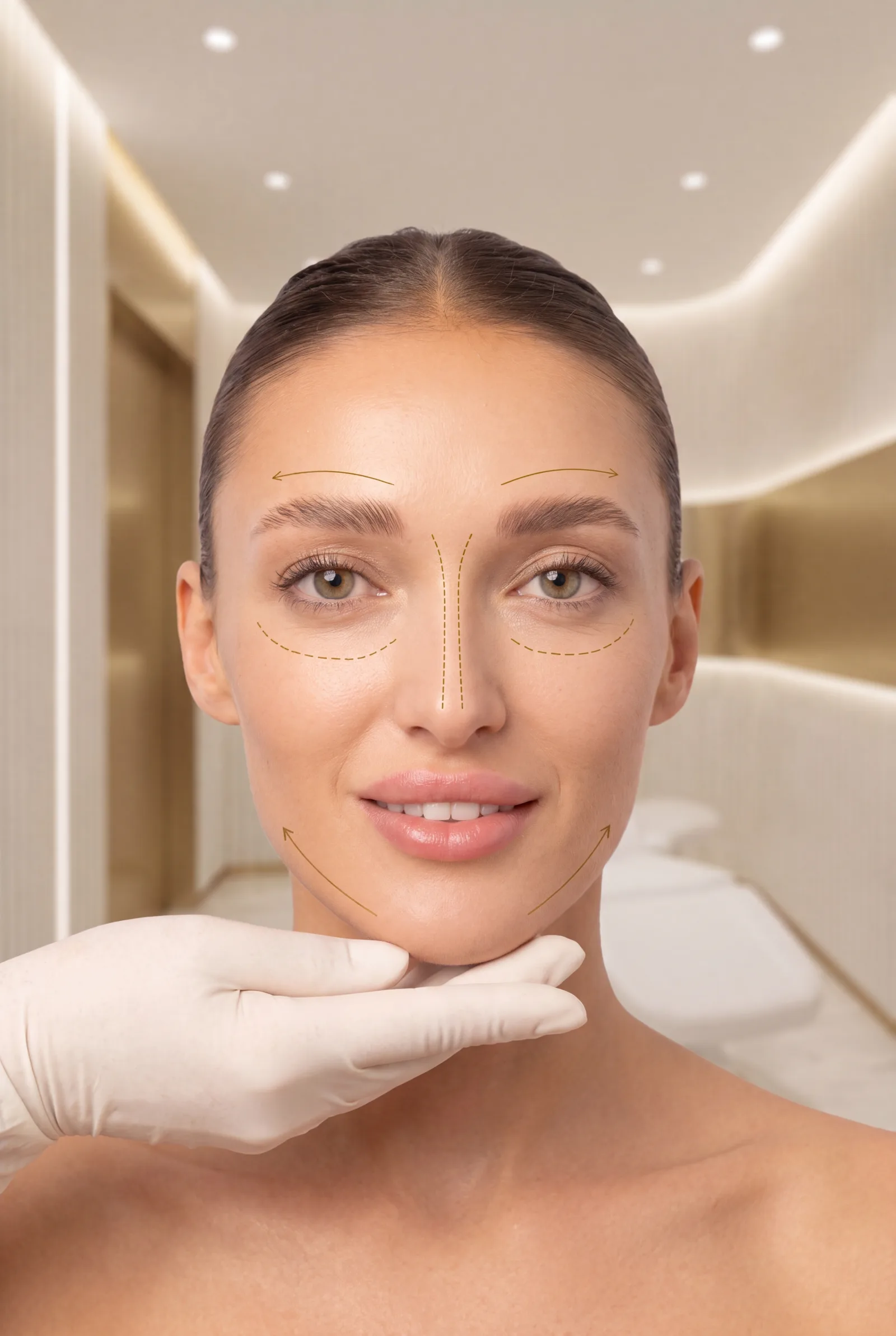
Facial ageing is not primarily a skin problem. Beneath the skin lies the SMAS — the superficial musculoaponeurotic system — a fibrous layer connected to the facial muscles. With time this layer descends, taking the fat compartments with it. Jowls form along the jawline, the midface flattens, and the neck loses its angle.

This explains why skin-only lifts produced the tight, wind-blown results that gave facelifts their reputation. Pulling skin over a descended deeper layer creates tension at the surface without restoring underlying position. Modern technique lifts the SMAS itself and repositions it upward and backward, so the skin is redraped without tension.

Deep plane technique releases the ligaments that tether the SMAS and lifts the entire unit as a single composite layer, which allows genuine midface repositioning rather than only jawline improvement. A face lift does not treat skin quality, pigmentation or volume loss — those need resurfacing and fat transfer, which are frequently planned alongside it.
Techniques & Options

Your Face Lift Options

01

Deep Plane Face Lift

The SMAS and overlying tissue are lifted as one composite unit after releasing the retaining ligaments, allowing genuine repositioning of the midface as well as the jawline. It is the most comprehensive technique and produces the most natural, longest-lasting result in suitable patients.

02

SMAS Face Lift

The SMAS layer is tightened or repositioned separately from the skin. A well-established, versatile technique with a strong evidence base, appropriate for a wide range of patients.

03

Mini Lift and Neck Lift

A shorter-scar lift addresses early jawline laxity in younger patients with limited descent. A neck lift specifically addresses banding and loss of the neck angle, and is very commonly combined with a full face lift rather than performed alone.

Candidacy

Is Face Lift Right for You?

You are likely a good candidate if

  • Visible jowling, midface descent or loss of neck definition
  • Reasonable skin elasticity remaining
  • In good general health with well-controlled blood pressure
  • Non-smoker, or willing to stop for several weeks before and after
  • Realistic expectations — looking rested rather than transformed

This may not be the right procedure if

  • Current smokers — skin flap healing risk is substantially higher
  • Uncontrolled hypertension or diabetes
  • Primary concern is skin texture or pigmentation, which needs resurfacing instead
  • Primary concern is volume loss, better addressed with fat transfer
  • Expectation of a permanent halt to facial ageing

How Face Lift Is Performed, Step by Step

1

01

Comprehensive Facial Assessment

Skin quality, tissue descent, volume loss, neck anatomy and bone structure are assessed separately, since each needs a different solution and only some of them are treated by lifting.

2

02

Technique Selection

Deep plane, SMAS, mini or combined with a neck lift is chosen from the pattern and degree of descent, not from a fixed clinic preference.

3

03

Incision Planning

Incisions follow the hairline and the natural creases in front of and behind the ear, planned to sit in shadow and concealed by hair where possible.

4

04

SMAS Repositioning

The deeper layer is released and repositioned upward and backward. This is the step that determines both how natural and how durable the result is.

5

05

Tension-Free Skin Redraping

Skin is redraped over the repositioned foundation and trimmed without tension. Tension at the skin level is what creates a stretched appearance and widened scars.

6

06

Recovery and Review

One night in hospital, with a supportive dressing. Scheduled reviews follow at one week, six weeks and six months.

Techniques Compared

Face Lift Techniques Compared

Face Lift Techniques Compared
Deep PlaneSMASMini LiftThread Lift
Layer treatedComposite SMAS and skinSMAS, then skinLimited SMASSubcutaneous only
Midface repositioningYesPartialMinimalMinimal
Result duration10–15 years8–12 years5–8 years12–18 months
SurgeryYes, general anaestheticYes, general anaestheticYesNo
Recovery2–3 weeks2–3 weeks1–2 weeks1–2 days
ScarHairline and around earHairline and around earShorterNone
Best forModerate to advanced descentModerate descentEarly jawline laxityVery mild laxity

The Honest View

Benefits and What to Consider

Benefits

  • Repositions the deeper tissue layer rather than pulling on skin
  • Addresses jowls, midface descent and neck laxity together
  • Deep plane results typically last ten to fifteen years
  • Incisions follow natural creases and the hairline
  • Combines well with fat transfer and resurfacing for a complete result
  • Aims to look rested and natural rather than tightened

What to consider

A face lift is major surgery under general anaesthetic, with risks including bleeding, haematoma, infection, temporary or rarely permanent facial nerve weakness, altered sensation, hair loss around incisions and scarring. Social downtime is two to three weeks and swelling takes six to eight weeks to settle meaningfully. Smoking substantially increases the risk of skin flap healing problems in this procedure specifically. It does not stop ageing, and it does not treat skin texture or volume loss.

Recovery

Your Recovery Timeline

  1. Days 1–3

    Swelling and bruising peak. Head elevated at all times. A supportive dressing is worn.

  2. Days 5–10

    Dressings and sutures removed in stages. Bruising begins to fade and moves downward.

  3. Weeks 2–3

    Most patients feel comfortable in social settings. Makeup can be used to conceal residual bruising.

  4. Weeks 4–6

    Swelling substantially reduced. Cleared for progressive return to exercise.

  5. Weeks 6–8

    Numbness and firmness improve steadily. The result begins to look natural rather than tight.

  6. Months 6–12

    Final settled result. Scars mature, soften and fade into the hairline and ear creases.

Google Reviews

What Our Patients Say

5-star rated clinic on Google

Very friendly and professional.

Alireza Mahmoudian, Verified Google Review

Frequently Asked Questions

Will I look like I've had a face lift?

Not if the deeper layer is repositioned properly. The tight, wind-blown appearance people fear comes from skin-only lifts that pull the surface over a descended foundation. Deep plane and SMAS techniques lift the foundation itself, so skin is redraped without tension.

How long does a face lift last?

A deep plane lift typically holds for ten to fifteen years, a SMAS lift for eight to twelve, and a mini lift for five to eight. Ageing continues regardless, but you generally continue to look younger than you would have without surgery.

What is the difference between deep plane and SMAS?

A SMAS lift tightens or repositions the deeper layer separately from the skin. A deep plane lift releases the retaining ligaments and lifts the SMAS and overlying tissue together as one composite unit, which allows genuine midface repositioning. Deep plane is more technically demanding and generally produces a more natural and longer-lasting result in suitable patients.

Will a face lift fix my skin texture?

No. A face lift repositions tissue; it does not change skin quality, pigmentation or fine lines. Those need resurfacing, and volume loss needs fat transfer. Many patients have these planned alongside the lift precisely because a lift alone leaves part of the picture untouched.

Where will the scars be?

Following the hairline at the temple, down the natural crease in front of the ear, around the earlobe and behind the ear into the hairline. They are positioned to sit in shadow and be concealed by hair, and fade substantially over six to twelve months.

Am I too young or too old for a face lift?

Age matters less than the degree of tissue descent and your skin elasticity. Patients in their forties with early jowling may suit a mini lift, while patients in their sixties and seventies often get excellent results from a full deep plane lift. General health matters more than the number.

Do I also need a neck lift?

Frequently, yes. The neck often shows ageing at least as clearly as the face, and lifting the face without addressing the neck can leave a visible mismatch. Your surgeon will assess both and advise whether combining is appropriate.

Plan Your Face Lift Around the Deeper Layer, Not the Skin

A free consultation with a board-certified plastic surgeon: skin quality, tissue descent, volume loss and neck anatomy assessed separately, and the technique chosen from your pattern of descent rather than a fixed preference.