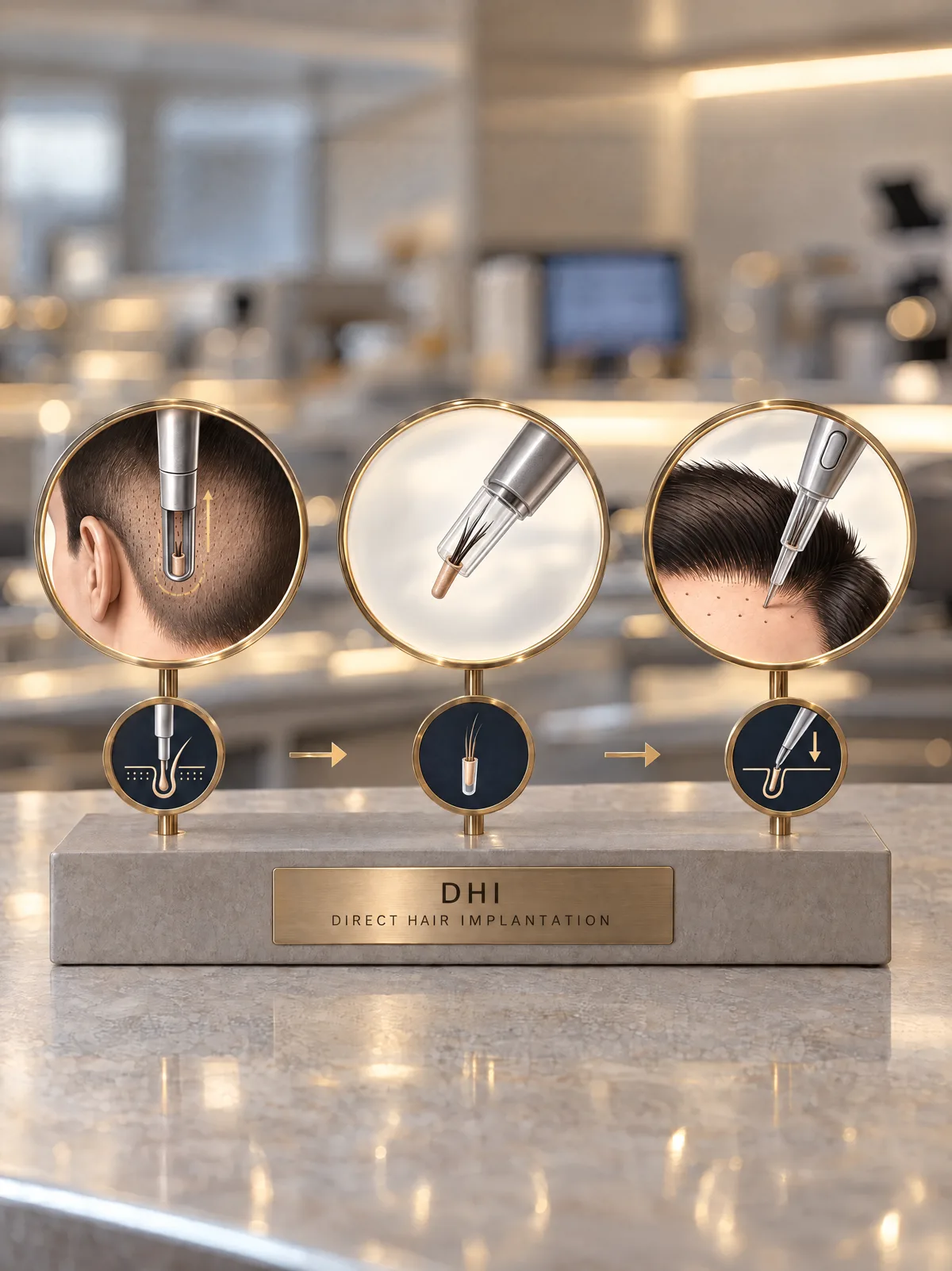
In standard FUE the operation runs in two separate stages: all the recipient channels are opened first, then grafts are placed into them one by one with forceps. DHI collapses those two stages into one. Each graft is loaded into a hollow-needle implanter pen — commonly called a Choi pen — which pierces the scalp and releases the follicle in a single movement.
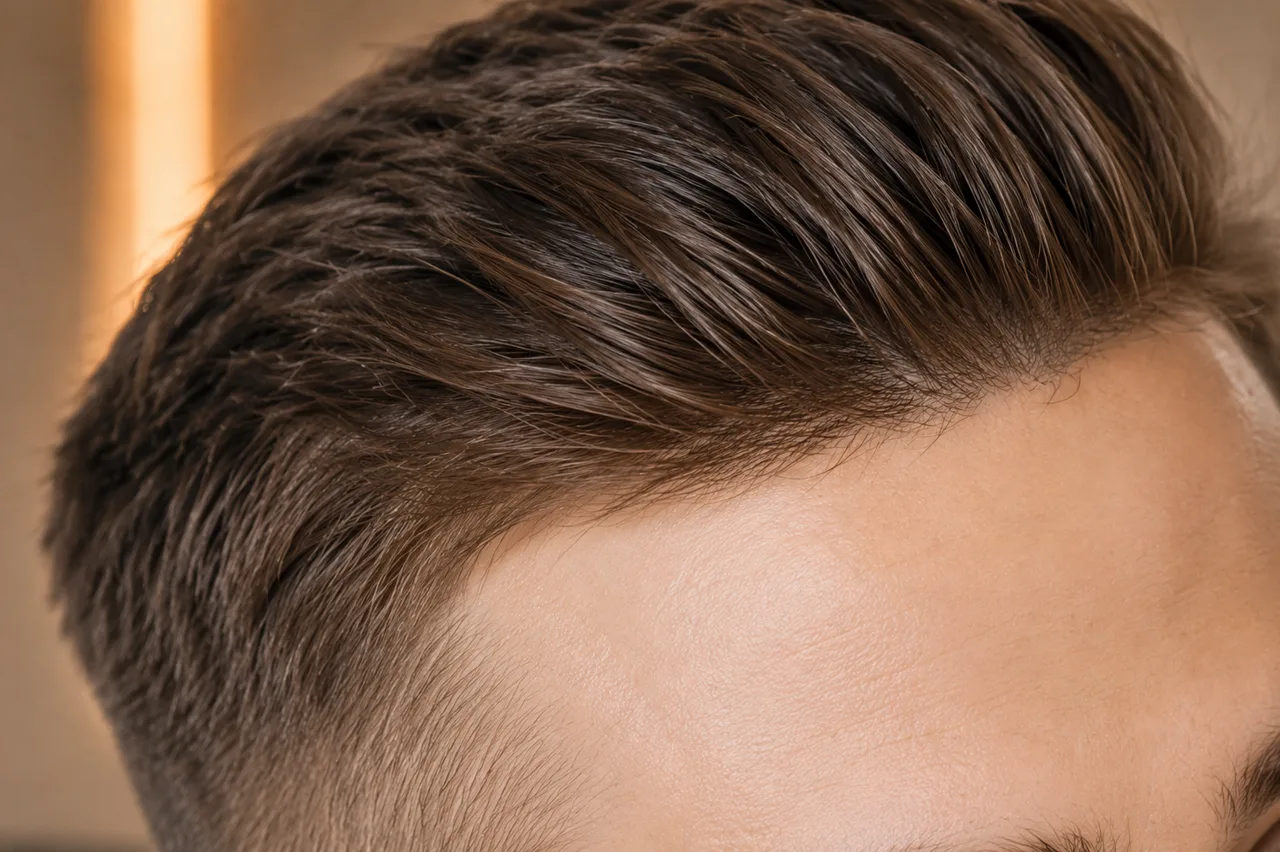
The practical advantage is control. The surgeon sets the angle, depth and direction of every individual graft at the moment of placement rather than committing to a grid of pre-made channels. For a hairline, where each of the first few hundred hairs has to emerge at a slightly different angle to look natural, that control is decisive.
There is a second benefit that matters to patients more than the technical one. Because the pen creates its own channel as it goes, DHI can be performed through existing hair — meaning partial shaving, or in smaller sessions no shaving at all. Grafts also spend less time outside the body, which supports follicle survival.