Hair & Scalp
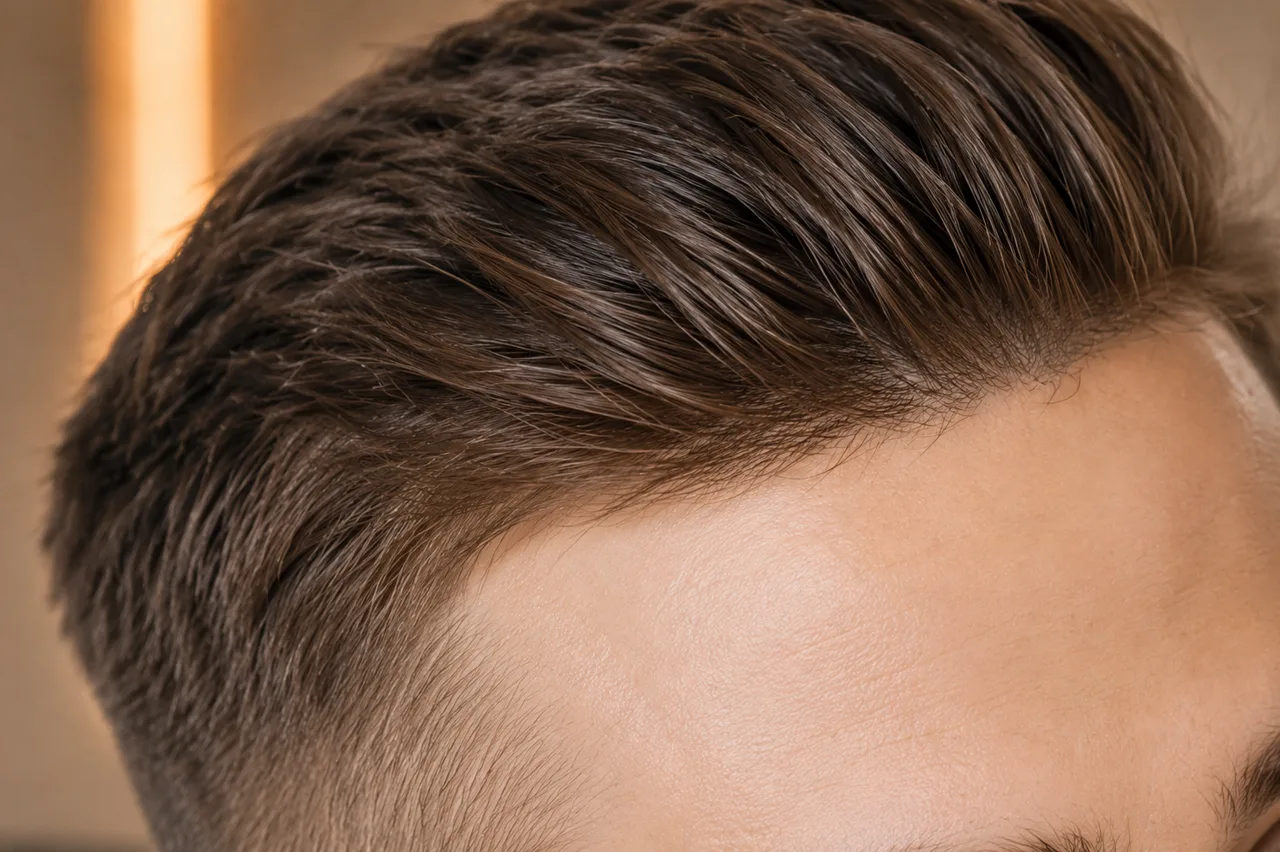
Used through the frontal zone and mid-scalp where volume and natural lift make the greatest visual difference. Particularly valuable for wavy and curly hair, where preserving curl direction adds apparent density without adding grafts.
Technique 10 · Percutaneous
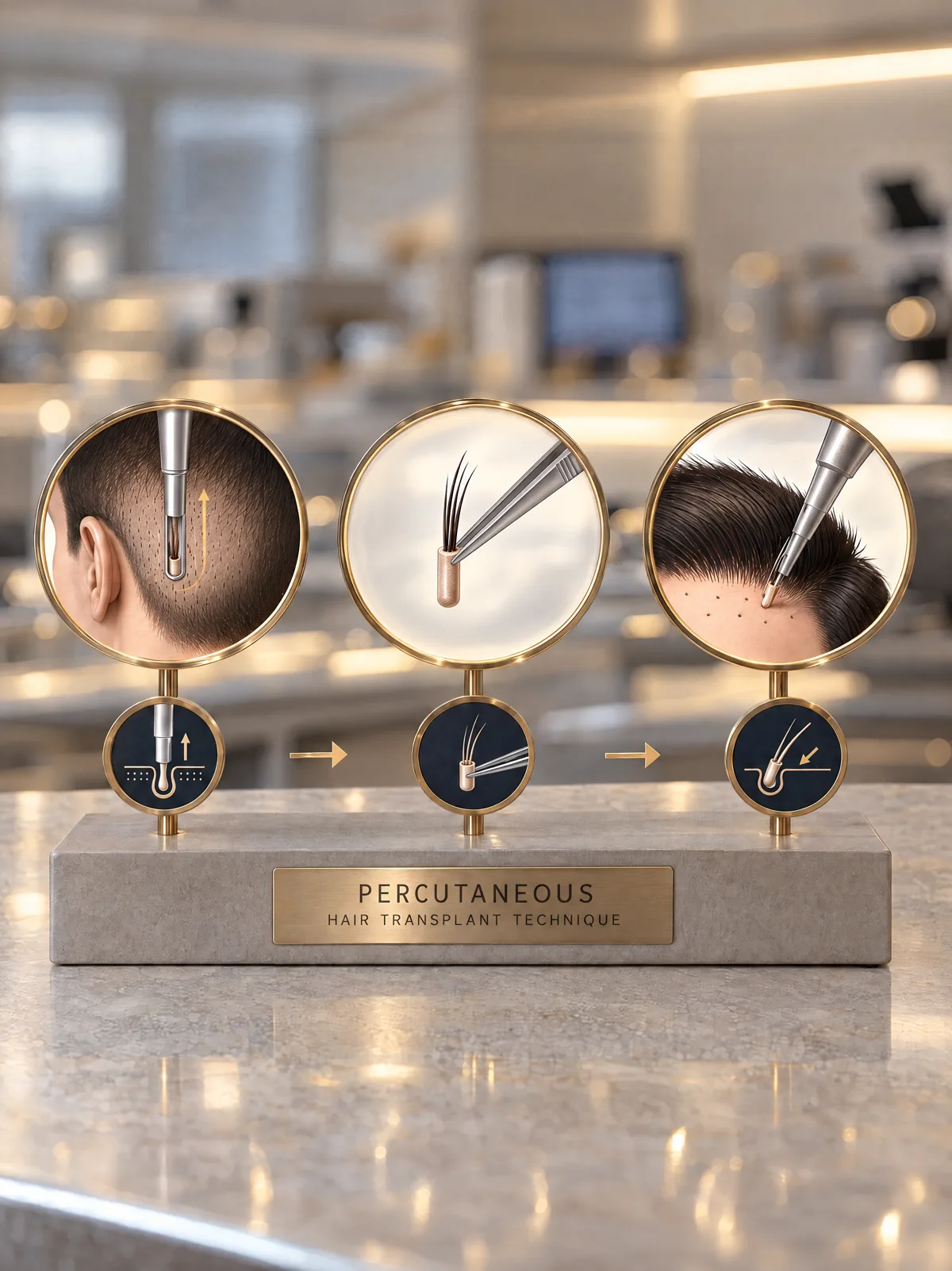
Recipient sites made with fine needles rather than blades. Round channels that match the shape of the follicle itself — holding grafts more securely, preserving curl, and producing hair that stands with its own volume.
Needle-Made Round Channels
Channels that match the natural cylindrical shape of the follicular unit
Upright, Natural Volume
Hair emerges in the direction the channel points, not flattened by a slit
Ideal for Wavy & Curly Hair
Preserves natural curl for more apparent density from the same grafts
Reduced Graft Popping
Even circumferential grip lowers displacement during placement
Percutaneous hair transplant Dubai
The percutaneous technique creates recipient sites using fine needles instead of blades. A needle makes a round, cylindrical channel that matches the natural shape of a follicular unit, whereas a blade makes a flat slit. Round channels grip the graft more securely, displace less surrounding tissue, and allow hair to emerge upright with its natural curl and volume rather than being flattened into the direction of a slit.
The Technique
Every hair transplant, whatever it is called, involves making a space in the recipient scalp for the graft to sit in. Most techniques make that space with a blade, producing a flat slit. The percutaneous technique makes it with a fine needle, producing a round, cylindrical channel — geometrically much closer to the shape of the follicular unit that will occupy it.
That difference has consequences you can see. A graft in a round channel is gripped evenly on all sides, so it is less likely to shift or pop out during placement. Less surrounding tissue is displaced, so healing is cleaner. And critically, the hair emerges in the direction the channel points rather than being flattened along the axis of a slit.
For patients this shows up as volume. Hair placed through percutaneous channels tends to stand up with its own natural lift and retain its curl, rather than lying flat against the scalp. In wavy and curly hair particularly — very common among our patients in Dubai — the difference in apparent density from the same number of grafts is genuinely noticeable.
“Round channels, not flat slits. Built to match the shape you already have.”
Our Approach
Needle gauge matched to your graft calibre before a single channel is made
Round, cylindrical channels created at the planned angle, depth and direction
Channels follow the natural whorl and flow of your existing hair, including the crown spiral
Often combined with sapphire FUE or DHI implantation for the finest frontal work
Even circumferential grip reduces graft popping during a long placement phase
Minimal tissue displacement supports cleaner healing
The technique of choice for wavy, curly and coarse hair where volume matters most
Treatment Areas
The same technique is executed differently in each area — graft size, implantation angle and density all change with the zone being treated.
Used through the frontal zone and mid-scalp where volume and natural lift make the greatest visual difference. Particularly valuable for wavy and curly hair, where preserving curl direction adds apparent density without adding grafts.
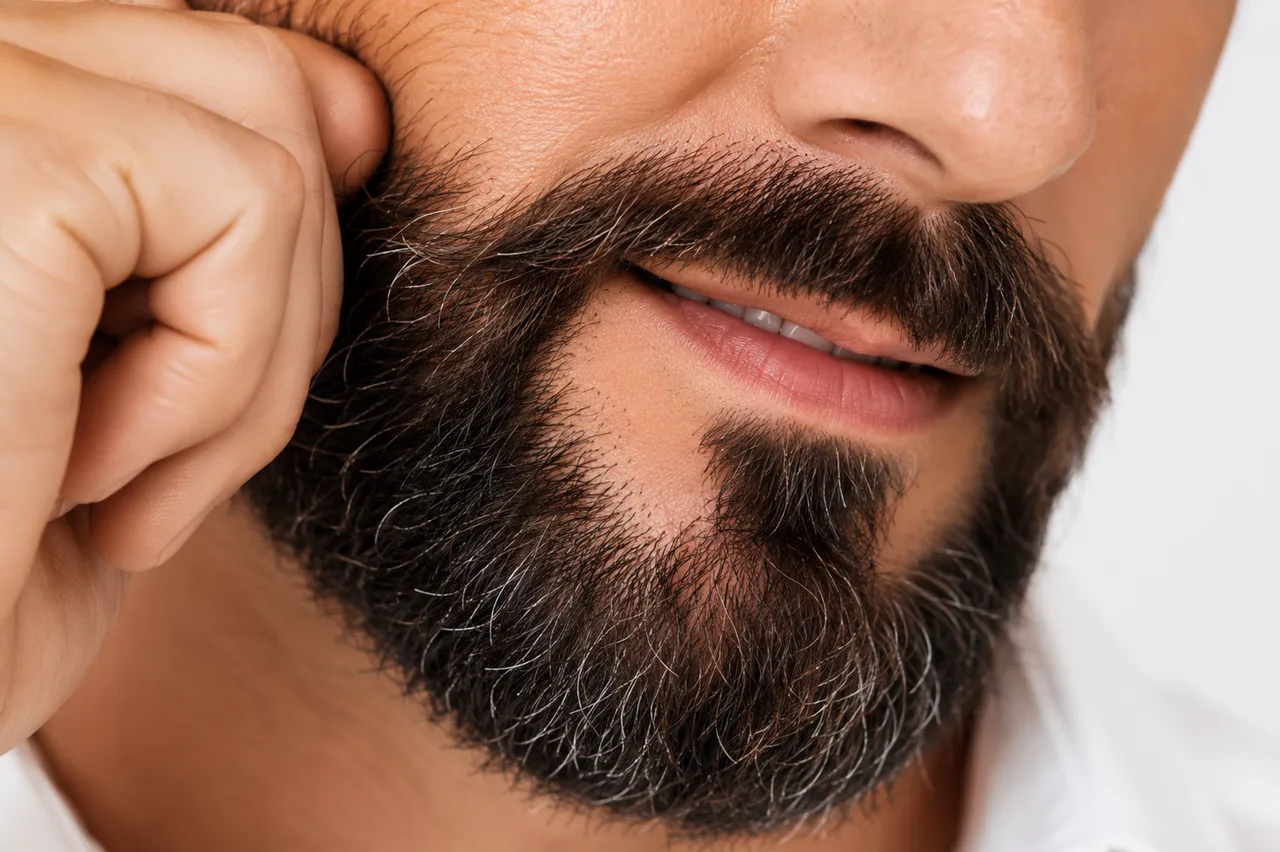
Facial hair grows at an acute angle and is often coarse and curved. Round needle channels hold that sharp angle far better than slits, which tend to let coarse beard grafts rotate out of position.
Explore Beard Transplant →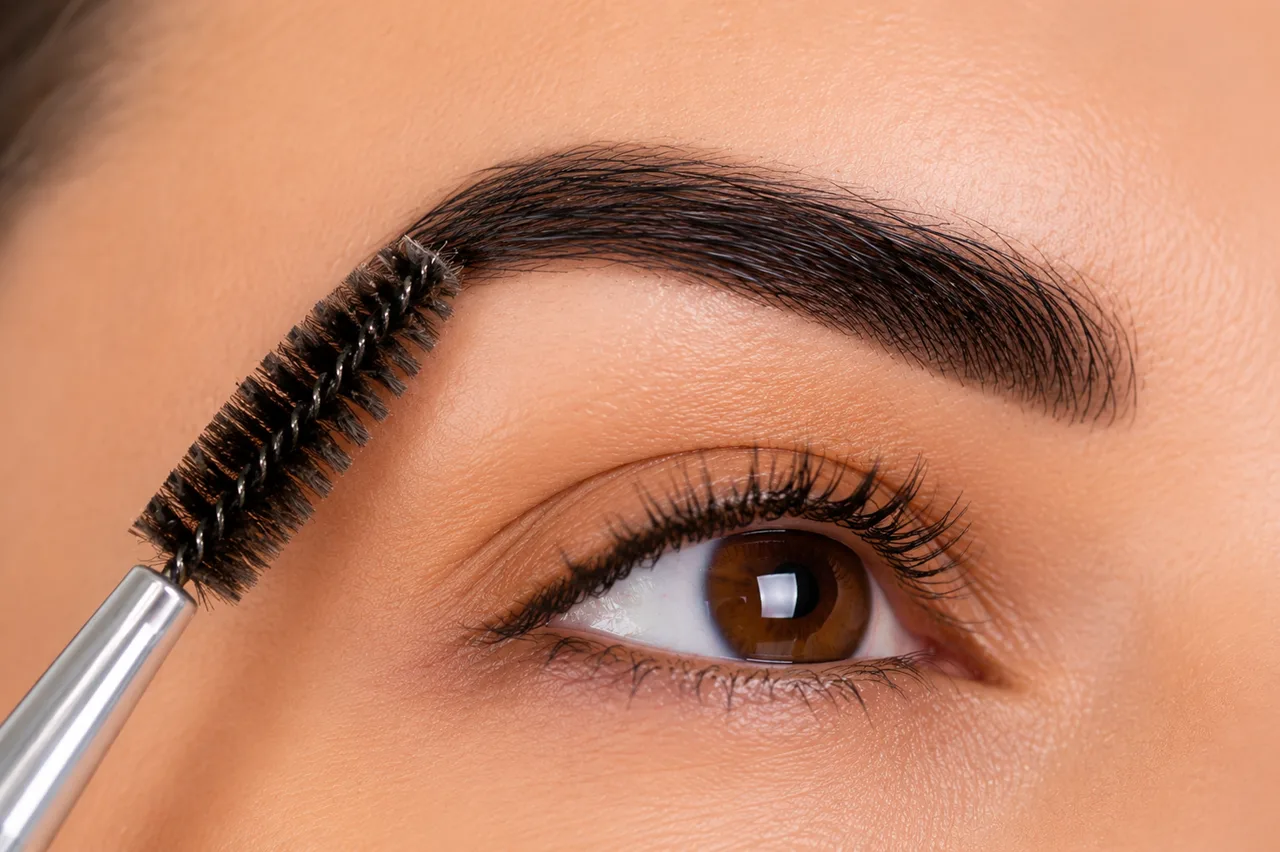
The technique suits brow work well, where each hair needs its own precise direction and where a graft rotating even slightly in a slit produces a visibly wrong hair. Frequently paired with DHI placement.
Explore Eyebrow Transplant →


Candidacy
Needle gauge is matched to your graft calibre. As with sapphire blades, a mismatch between instrument and graft size is the most common technical error.
Follicular units are harvested by FUE, or by FUT where a very large session is planned. The percutaneous element concerns site creation, not harvesting.
Fine needles create round channels at the planned angle, depth and direction. Depth control is critical — too shallow and grafts sit proud, too deep and they become buried.
Channels follow the natural whorl and flow of your existing hair, including the crown spiral, so the result behaves correctly when styled.
Grafts are seated into channels sized to fit them. The even circumferential grip substantially reduces popping during a long placement phase.
Often paired — percutaneous channels along the hairline with sapphire or standard FUE behind, or with DHI implanter placement for the finest frontal work.
Compare
Swipe to see more
| Percutaneous (Needle) | Blade Slit | |
|---|---|---|
| Channel shape | Round, cylindrical | Flat slit |
| Match to follicle shape | Close | Approximate |
| Graft grip | Even, all around | Two-sided |
| Popping during placement | Reduced | More common |
| Hair emergence | Upright, natural volume | Flattened along the slit |
| Curl preservation | Good | Reduced |
| Tissue displacement | Minimal | Moderate |
| Speed | Slower | Faster |
| Best for | Naturalness, volume, curly hair | Efficiency, large coverage |
Honest Assessment
Recovery
Days 1–3
Pinpoint recipient marks, typically with less swelling than wider slit techniques.
Days 4–8
Crusting clears. Most patients return to work within this window.
Weeks 2–6
Shedding phase, identical to all transplant techniques.
Months 3–4
New growth begins, emerging upright rather than flat from the first millimetre.
Months 6–9
Volume and curl become apparent — the point at which the technique's advantage shows.
Months 12–18
Final density, texture and styling behaviour assessed at your twelve-month review.
Google Reviews
Very friendly and professional.
— Alireza Mahmoudian, Verified Google Review
Percutaneous simply means through the skin. In hair transplantation it refers to creating recipient sites with fine needles rather than blades. The needle produces a round, cylindrical channel matching the natural shape of a follicular unit, rather than the flat slit a blade produces.
They address the same step — recipient site creation — differently. Sapphire blades make finer, cleaner slits and allow very dense packing. Percutaneous needles make round channels that grip better and preserve volume and curl. For maximum frontal density, sapphire; for maximum naturalness and lift, particularly in wavy or curly hair, percutaneous. They can also be combined within one design.
It works with FUE, and with FUT. Percutaneous describes how the recipient sites are made, not how grafts are harvested, so it combines with any extraction method and is often paired with DHI placement in the hairline.
Notably so. Curly and wavy follicles are curved, and a flat slit tends to force them into the axis of the slit, flattening the curl. A round channel lets the follicle sit in its natural orientation, which preserves curl and increases apparent density from the same number of grafts.
Yes. Making individual round channels is slower than making slits, so sessions typically run six to nine hours and often carry a modest cost premium for the additional surgical time.
Often, yes. Where a previous result looks flat or lifeless because grafts were placed in wide slits at poor angles, adding percutaneously placed grafts at corrected angles can restore lift and volume. Assessment of the existing result comes first.
Related Techniques
Every Elora hair restoration journey begins with a complimentary consultation and scalp assessment. Our specialists evaluate your donor area, hair loss pattern, facial proportions and long-term goals, then recommend the technique — or combination of techniques — that will give you the most natural result.