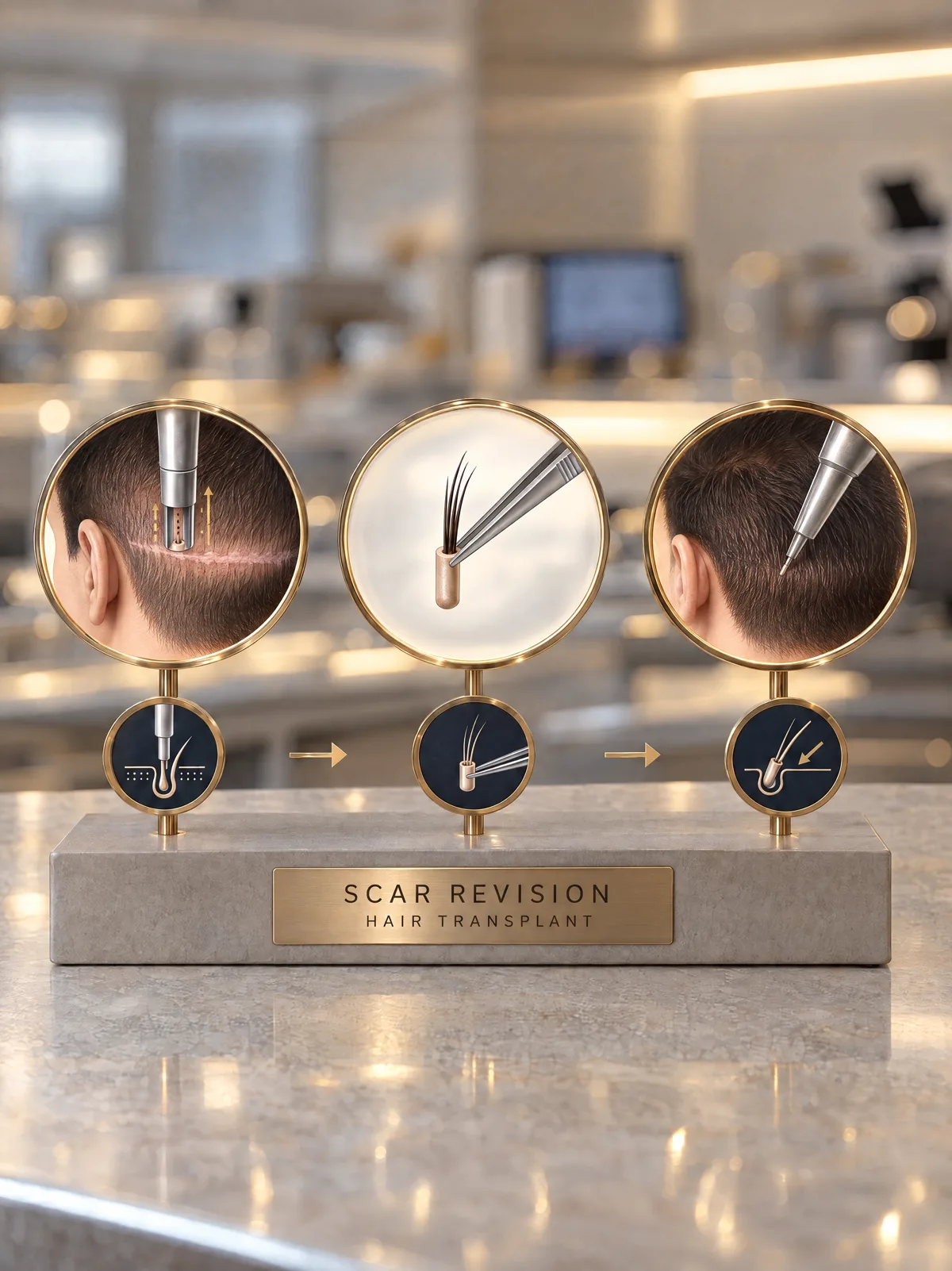
Scar tissue is biologically different from healthy skin. It is denser, more fibrous, and carries a reduced network of blood vessels — which is why hair does not grow through it naturally, and why implanting grafts into it is a different surgical problem from a routine transplant.
The technique is the same in principle: follicular units are extracted from the donor area by FUE and implanted into recipient sites. But the sites must be made at a shallower, more carefully judged depth, density has to be moderated because over-packing compromised tissue starves the grafts, and the surgeon works with the direction of the scar rather than against it.
Because survival in scar tissue is typically 60 to 80 percent rather than the 90 percent plus seen in healthy scalp, treatment is often planned in two stages. The first session establishes blood supply and demonstrates how your particular scar responds. The second, eight to twelve months later, builds density into tissue that is already better vascularised.