Technique 09 · Stem Cell-Assisted · Emerging

Stem Cell-Assisted Hair Restoration in Dubai

Regenerative therapy used alongside surgery to support graft survival and strengthen the hair you still have. An adjunct with real promise and real limits — and we are specific about both.

Your Own Biological Material

Autologous concentrate — adipose-derived cells, micrografted follicular tissue or PRP — minimises reaction risk

Supports Graft Survival

Timed around transplant surgery to support graft take and speed healing

Non-Surgical, Same-Day Recovery

Topical or local anaesthetic; most patients return to work the same day

Positioned Honestly as an Adjunct

Offered to support surgery and protect existing hair — never marketed as a replacement for transplantation

Stem cell hair restoration Dubai

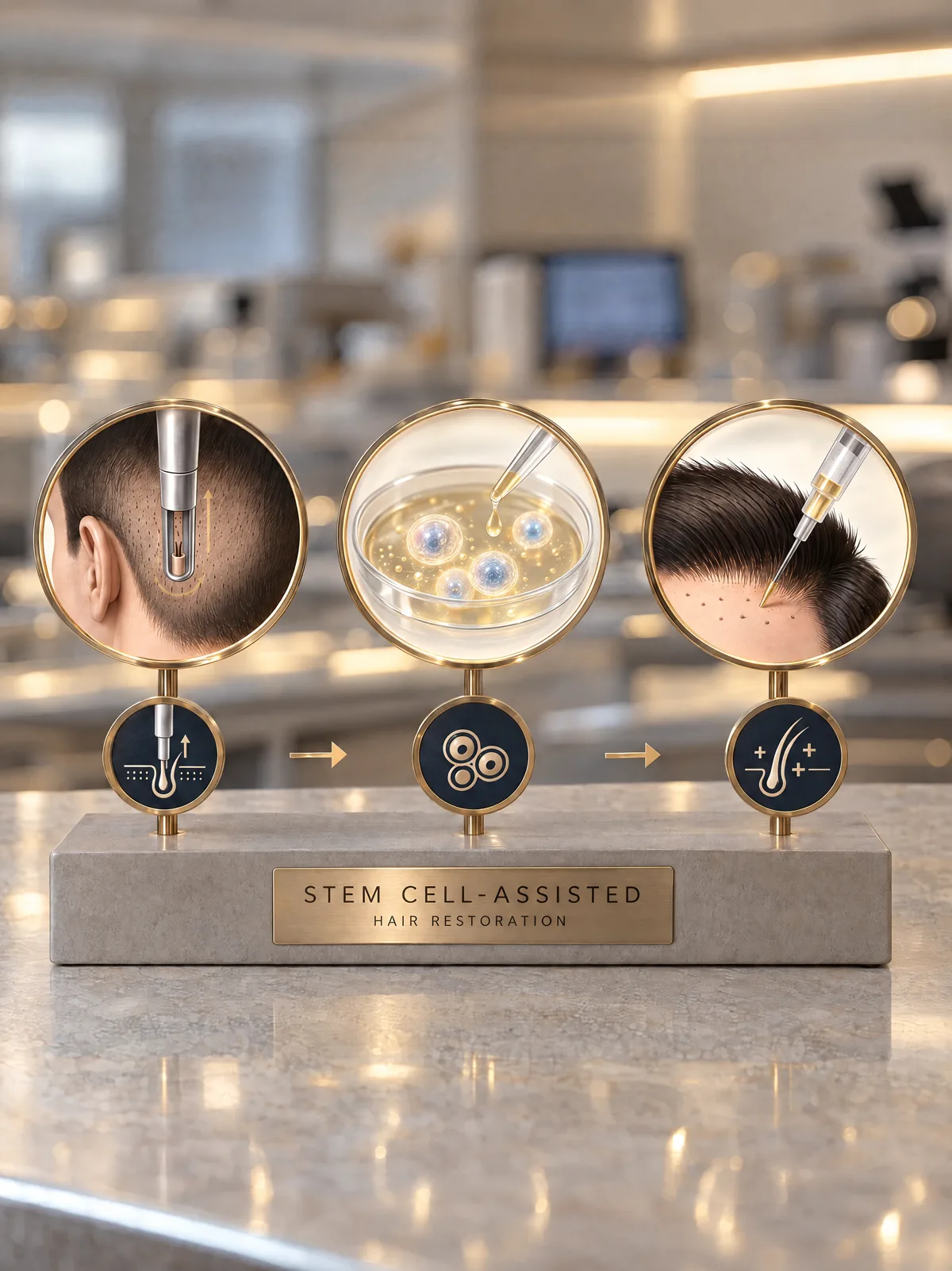
Stem cell-assisted hair restoration uses regenerative material — typically adipose-derived cells, micrografted follicular tissue or platelet-rich plasma — injected into the scalp to support hair follicle function. It is not a replacement for hair transplantation and does not create new follicles where none exist. At Elora it is offered as an adjunct: supporting graft survival after surgery, and strengthening native hair in early-stage thinning. Evidence is promising but still emerging.

Anaesthetic
Topical / local
Session length
60–90 minutes
Course
3 sessions, 4–6 weeks apart
Back to work
Same day
Downtime
24–48 hours
Status
Adjunctive, emerging evidence

The Technique

What Is Stem Cell-Assisted Hair Restoration?

The term covers a family of regenerative treatments rather than one procedure. In practice it means preparing a concentrate of your own biological material — adipose-derived cells from a small fat sample, micrografted follicular tissue from a tiny punch of scalp, or platelet-rich plasma from your own blood — and delivering it into the scalp to support follicle function.

The rationale is sound. Hair follicles are among the most metabolically active structures in the body, and they depend on growth factors and blood supply. Regenerative preparations concentrate those signals. In miniaturising follicles that are still alive but producing progressively finer hair, that support can measurably improve calibre and reduce shedding.

What it cannot do is create a follicle where none remains. Once a follicle has fully fibrosed, no injection currently available will bring it back — which is why we position this as an adjunct. Used around surgery it supports graft survival and speeds recovery. Used in early thinning it helps protect what you still have. Used as a replacement for a transplant, it disappoints.
An adjunct with real promise and real limits — and we are specific about both.

Our Approach

An Adjunct to Surgery, Not a Replacement For It

Your own biological material processed on site — adipose-derived cells, micrografted follicular tissue or platelet-rich plasma

A course of three sessions spaced four to six weeks apart

Objective reassessment with trichoscopy and standardised photography at month six

Timed around transplant surgery to support graft survival and healing

Best results are seen in follicles that are miniaturising, not fully lost

Offered as an add-on to surgical packages, never marketed as a stand-alone cure

Maintenance sessions considered only when reassessment shows a measurable response

Treatment Areas

Stem Cell-Assisted Hair Restoration for Hair, Beard and Eyebrows

Hair & Scalp

The primary application: strengthening miniaturising hair in early to moderate thinning, and supporting graft survival and healing when delivered around a transplant procedure. Best results are seen where follicles are weakening rather than gone.

Beard & Moustache

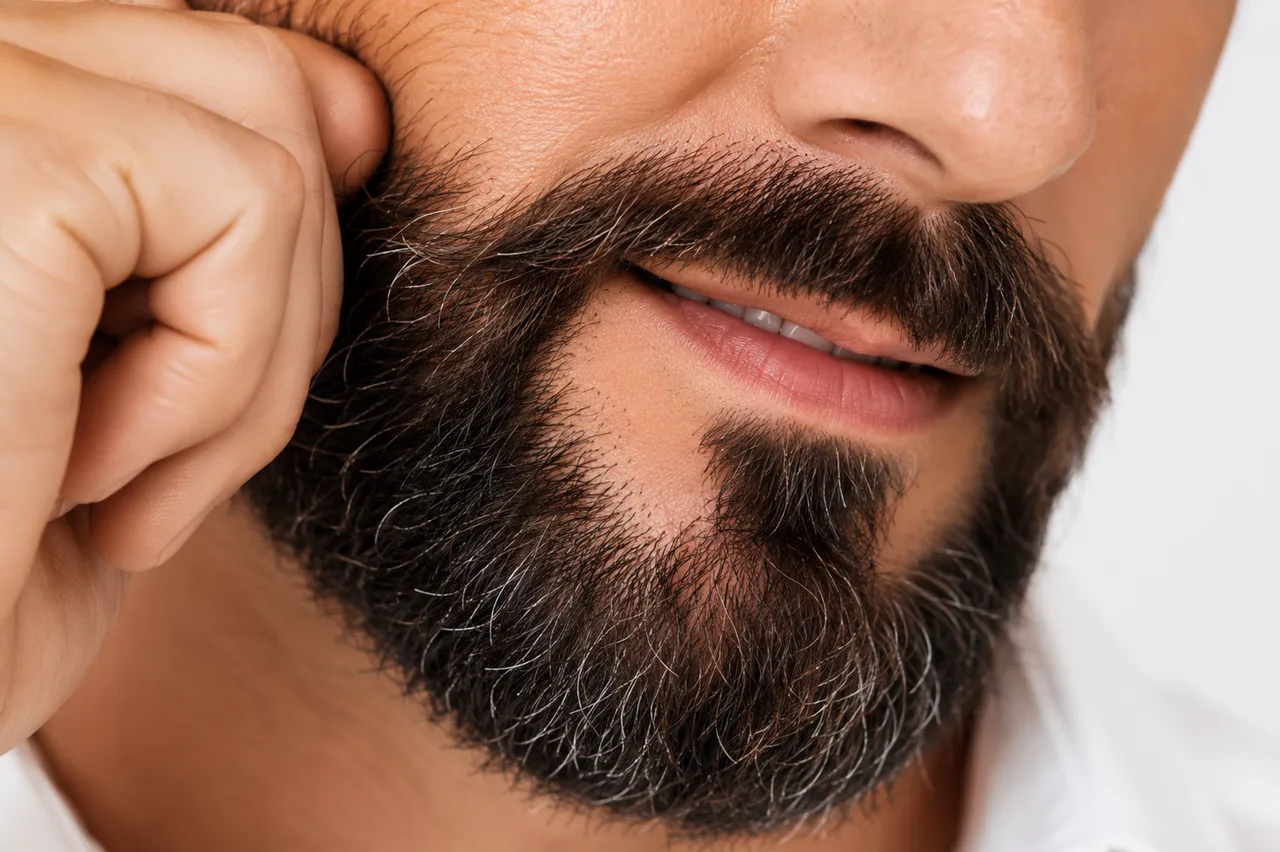
Used to encourage density in patchy beard areas where follicles are present but underperforming, and as post-operative support after a beard transplant. It will not produce growth in areas with no follicles at all.

Explore Beard Transplant

Eyebrows

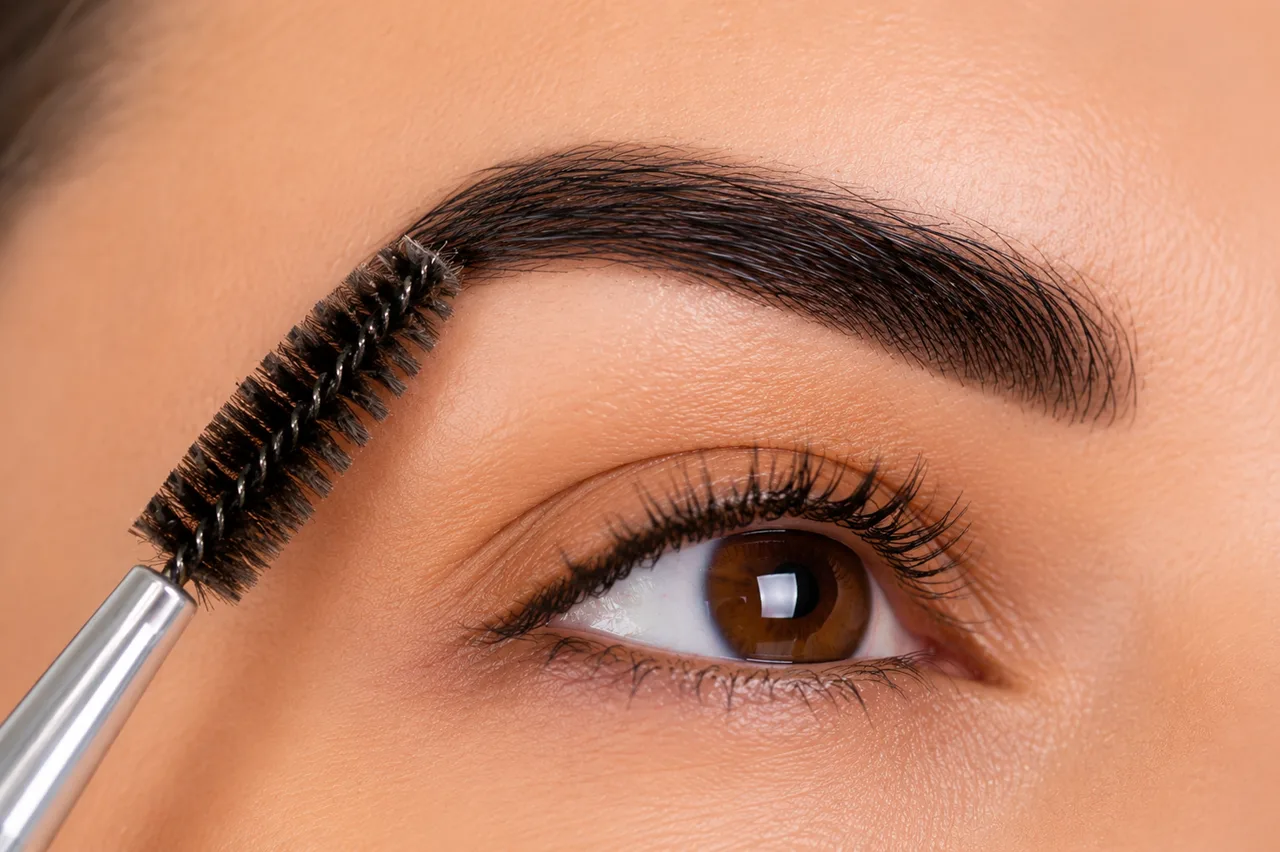
Applied in low volumes to support thinning brows, particularly after over-plucking where follicles are dormant rather than destroyed. Frequently combined with a brow transplant to support graft take.

Explore Eyebrow Transplant

Stem Cell-Assisted Hair Restoration Results
at Elora

Before
Before
After
After
Before
Before
After
After
Before
Before
After
After
Before
Before
After
After
Before
Before
After
After
Before
Before
After
After
Before
Before
After
After
Before
Before
After
After

Candidacy

Is Stem Cell-Assisted Hair Restoration Right for You?

You are likely a good candidate if

  • Early to moderate thinning with follicles still present
  • Patients undergoing a transplant who want support for graft survival
  • Diffuse thinning not yet advanced enough for surgery
  • Post-partum and stress-related shedding
  • Maintaining native hair alongside medical therapy

This may not be the right technique if

  • Completely bald areas with no remaining follicles
  • Anyone seeking a substitute for hair transplantation
  • Active scalp infection or inflammatory scalp disease
  • Blood disorders or anticoagulant therapy without medical clearance
  • Patients who expect guaranteed and dramatic regrowth

How Stem Cell-Assisted Hair Restoration Is Performed, Step by Step

1

Assessment & Trichoscopy

Scalp is examined under magnification to determine whether follicles are miniaturising, which is treatable, or fully lost, which is not. This assessment decides whether the treatment is worth your money at all.

2

Sample Collection

Depending on the protocol, a blood sample, a small fat sample or a tiny punch of scalp tissue is taken under local anaesthetic.

3

Processing

The sample is processed on site — centrifuged or mechanically disaggregated — to concentrate the regenerative fraction. Preparation takes twenty to forty minutes.

4

Scalp Delivery

The concentrate is injected into the affected scalp at follicle depth in a systematic grid, under topical or local anaesthetic.

5

Course & Review

A standard course is three sessions spaced four to six weeks apart, with trichoscopic reassessment at month six to measure change objectively rather than by impression.

6

Integration With Surgery

When used around a transplant, treatment is timed to the procedure — typically once before and once in the weeks following — to support graft take and healing.

Compare

Where Regenerative Therapy Fits

Where Regenerative Therapy Fits
Stem cell-assistedPRPHair transplant
Creates new folliclesNoNoYes — relocates existing
Strengthens existing hairYesYesNo
Works on bald areasNoNoYes
Sessions needed3, then maintenance3–4, then maintenanceOne procedure
Downtime24–48 hours24 hours7–10 days
Evidence baseEmergingModerateWell established
Best used asAdjunct to surgeryMaintenanceDefinitive treatment

Honest Assessment

Benefits and Considerations

Benefits

  • Uses your own biological material, minimising reaction risk
  • May improve graft survival and healing when combined with surgery
  • Can improve calibre and reduce shedding in miniaturising hair
  • Minimal downtime — most patients return to work the same day
  • Non-surgical and repeatable
  • Useful for patients not yet ready for a transplant

Considerations

  • Evidence is emerging rather than established
  • Not approved by the US FDA as a treatment for pattern hair loss
  • Cannot regrow hair where follicles no longer exist
  • Results vary considerably between individuals
  • Maintenance sessions are needed to sustain any benefit
  • Should never be presented, or purchased, as an alternative to surgery

Recovery

Your Recovery and Growth Timeline

  1. Day 0

    Treatment session. Mild tenderness and pinpoint marks at injection sites.

  2. Days 1–2

    Redness settles. Normal activity resumes; avoid heat and vigorous exercise for forty-eight hours.

  3. Weeks 4–6

    Second session. Some patients report reduced shedding by this point.

  4. Weeks 8–12

    Third session completes the initial course.

  5. Month 6

    Objective reassessment with trichoscopy and standardised photography — measured, not estimated.

  6. Month 9–12

    Maintenance sessions considered based on documented response.

Google Reviews

What Our Patients Say

5-star rated clinic on Google

Very friendly and professional.

Alireza Mahmoudian, Verified Google Review

Frequently Asked Questions

Can stem cell therapy regrow my hair?

It can improve the calibre and reduce shedding of hair follicles that are miniaturising but still alive. It cannot create a follicle where none remains. If an area is genuinely bald, no injection currently available will restore it — transplantation is the only technique that moves living follicles into a bald zone.

Is stem cell hair treatment FDA approved?

No. Stem cell-based therapies are not FDA-approved as a treatment for androgenetic alopecia, and regenerative hair treatments generally remain investigational. In the UAE these therapies are performed within DHA-regulated practice. We describe the treatment as emerging because that is accurate.

How is it different from PRP?

PRP concentrates platelets and growth factors from your blood. Stem cell-assisted protocols use cellular material — adipose-derived cells or micrografted follicular tissue — which contains a broader regenerative fraction. Both aim to support existing follicles rather than create new ones, and PRP has the larger published evidence base.

Should I have this instead of a transplant?

No. If you have bald areas that need coverage, a transplant is the treatment and regenerative therapy is the support. Any clinic offering injections as a substitute for surgery in an area with no follicles is selling something that cannot work.

How many sessions will I need?

A standard initial course is three sessions four to six weeks apart, reassessed objectively at month six with trichoscopy and standardised photography. Maintenance sessions are considered only if that assessment shows a measurable response.

Does it hurt?

Topical or local anaesthetic makes the injections tolerable. Most patients describe mild pressure and brief stinging. Tenderness settles within a day or two.

Will it help my transplant results?

This is where the evidence is most encouraging and where we use it most. Delivered around a transplant, regenerative therapy appears to support graft survival, reduce post-operative shedding of surrounding native hair, and speed healing. It is offered as an add-on to surgical packages for that reason.

How Elora positions this treatment

Regenerative hair therapy is an area where marketing has run considerably ahead of published evidence. Stem cell-based hair treatments are not approved by the US FDA as a cure for androgenetic alopecia, no clinic anywhere can currently regrow hair on a truly bald scalp with injections alone, and any claim otherwise should be treated as a warning sign. Elora offers these therapies only as an adjunct — supporting graft survival around surgery and strengthening existing native hair in early thinning — and never as a substitute for transplantation.

Book Your Free Hair Restoration Consultation

Every Elora hair restoration journey begins with a complimentary consultation and scalp assessment. Our specialists evaluate your donor area, hair loss pattern, facial proportions and long-term goals, then recommend the technique — or combination of techniques — that will give you the most natural result.