
01
FUE Hair Transplant
Best For
- Receding hairlines
- Crown thinning
- Male pattern hair loss
- Density restoration

Hair Transplant Department
Most clinics choose your technique for you, because they only perform one. At Elora, the technique is chosen for your donor area, your hair loss pattern and your life — from ten surgical and regenerative options, delivered across hair, beard and eyebrows.
Ten Techniques Under One Roof
Hair, Beard & Eyebrow Restoration
Free First Consultation
DHA-Licensed & Regulated in Dubai
Ten routes to the same standard. Each links to a full explanation of how it works, who it suits, and how it performs on scalp, beard and eyebrows.
Best For
Best For
Best For
Best For
Best For
Best For
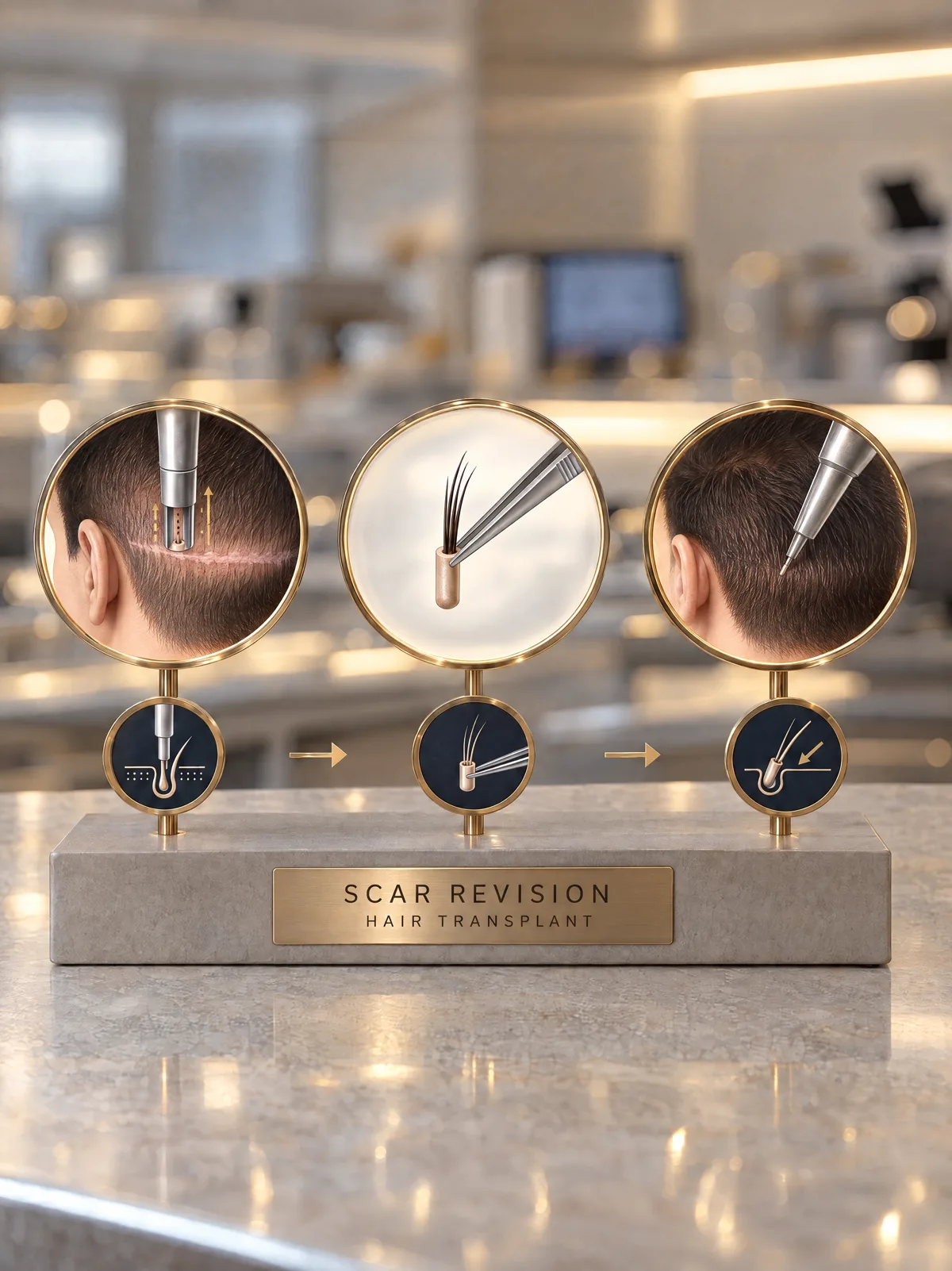
Best For
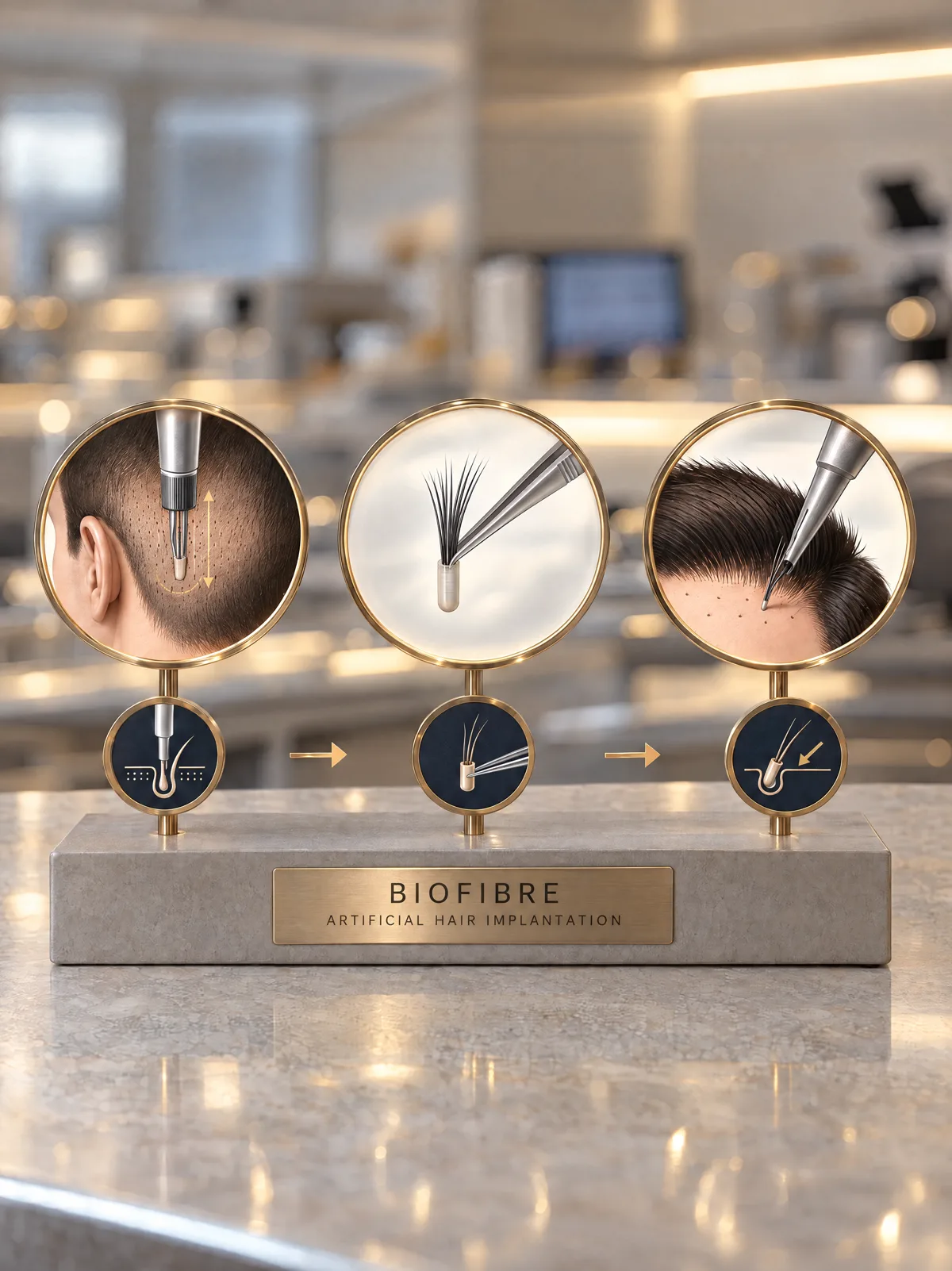
Best For
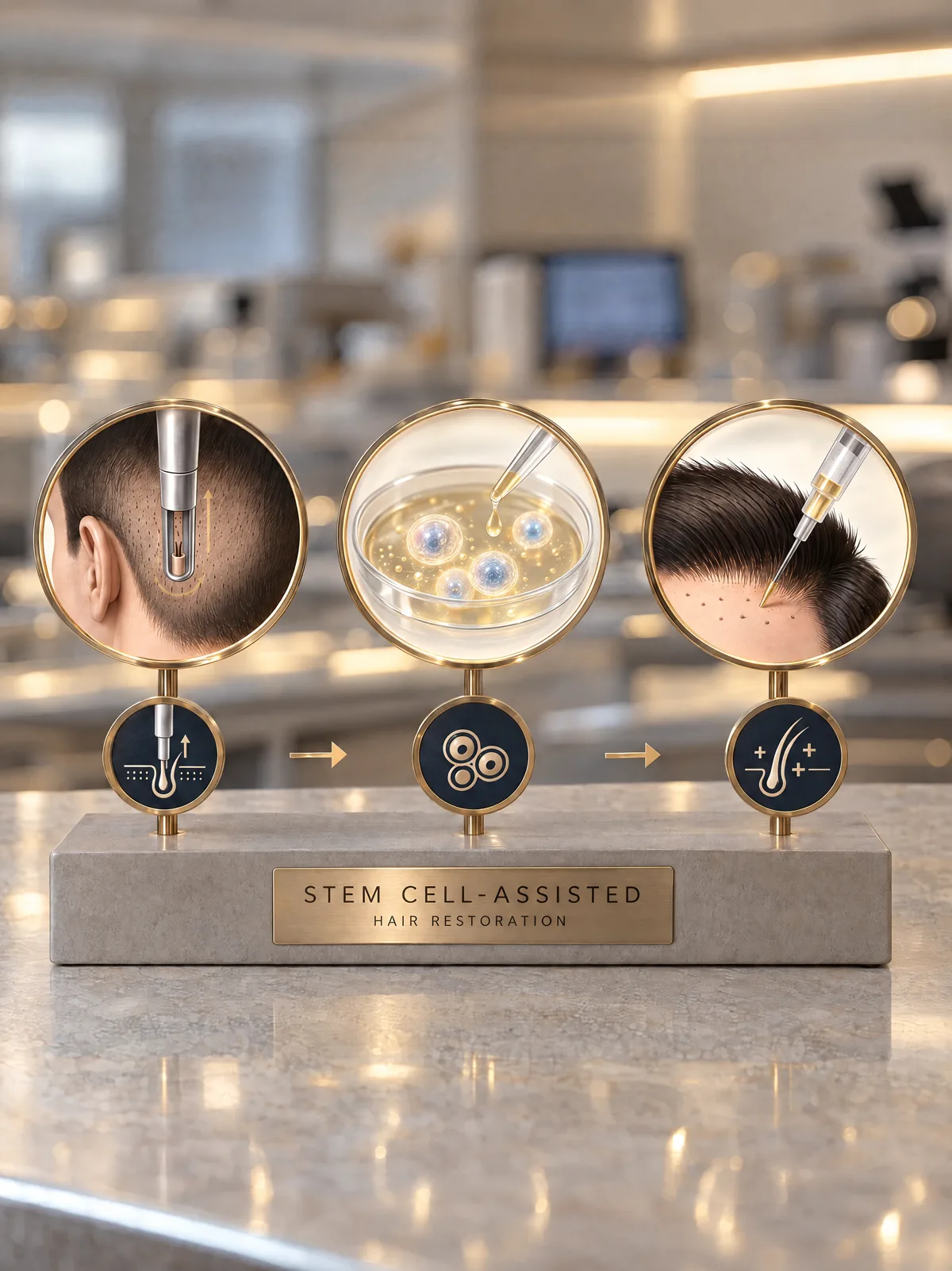
Best For
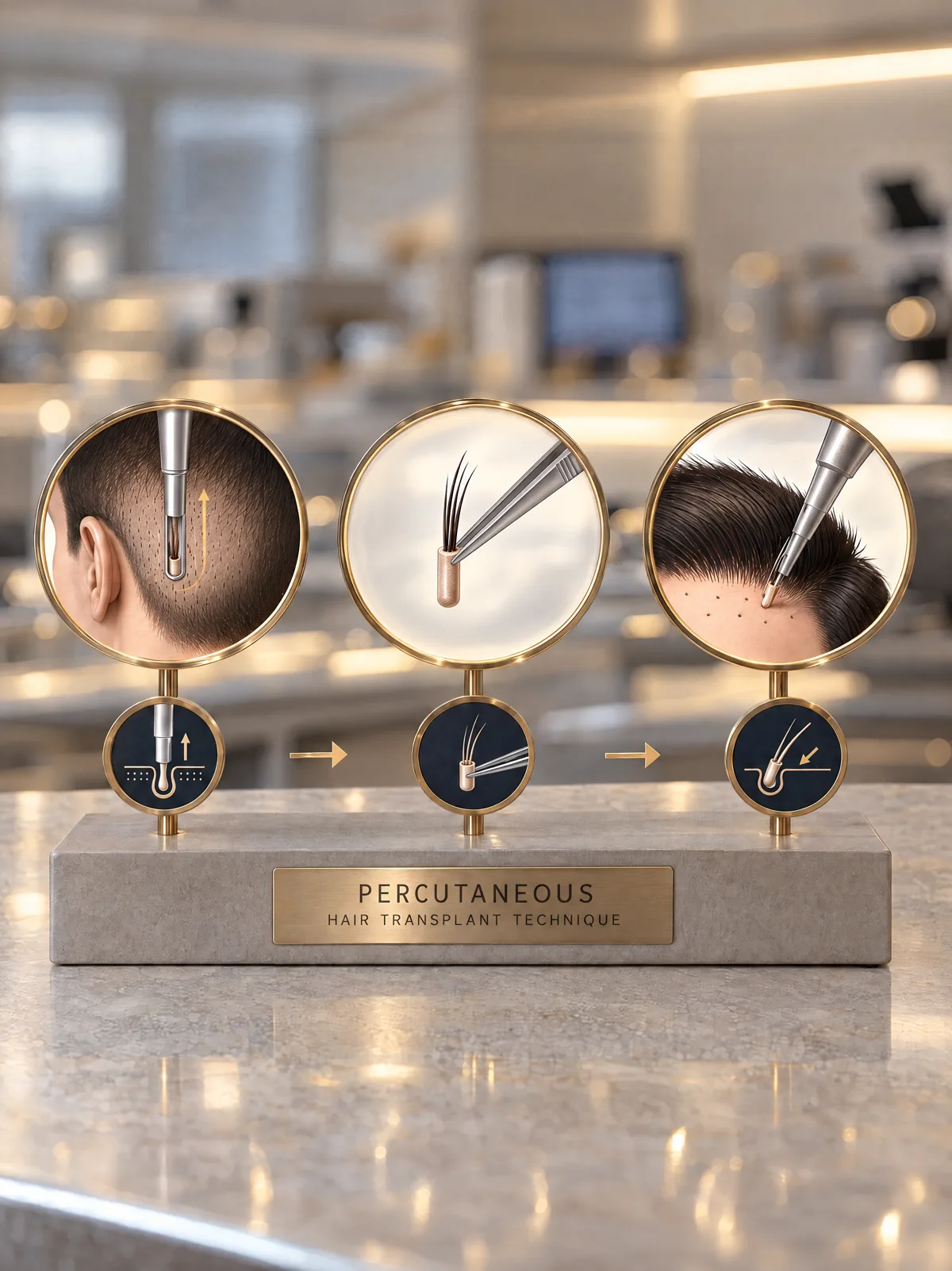
Best For
Three Areas, One Department
The area being treated changes everything about how a technique is executed — graft size, implantation angle, density per square centimetre, and how the result is designed.
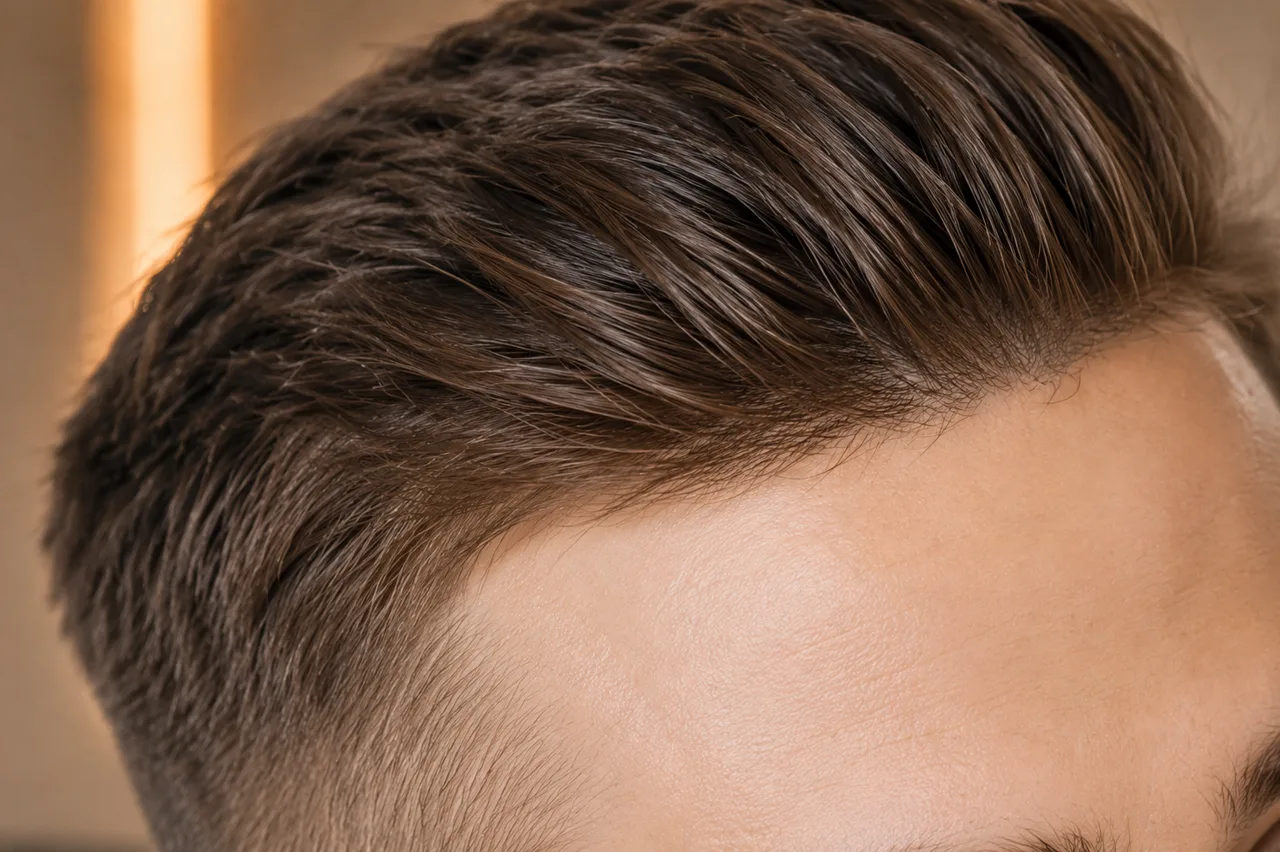
Receding temples, thinning crowns and diffuse density loss are rebuilt with a hairline designed to your facial proportions and age, using irregular, soft transition zones rather than a straight line.
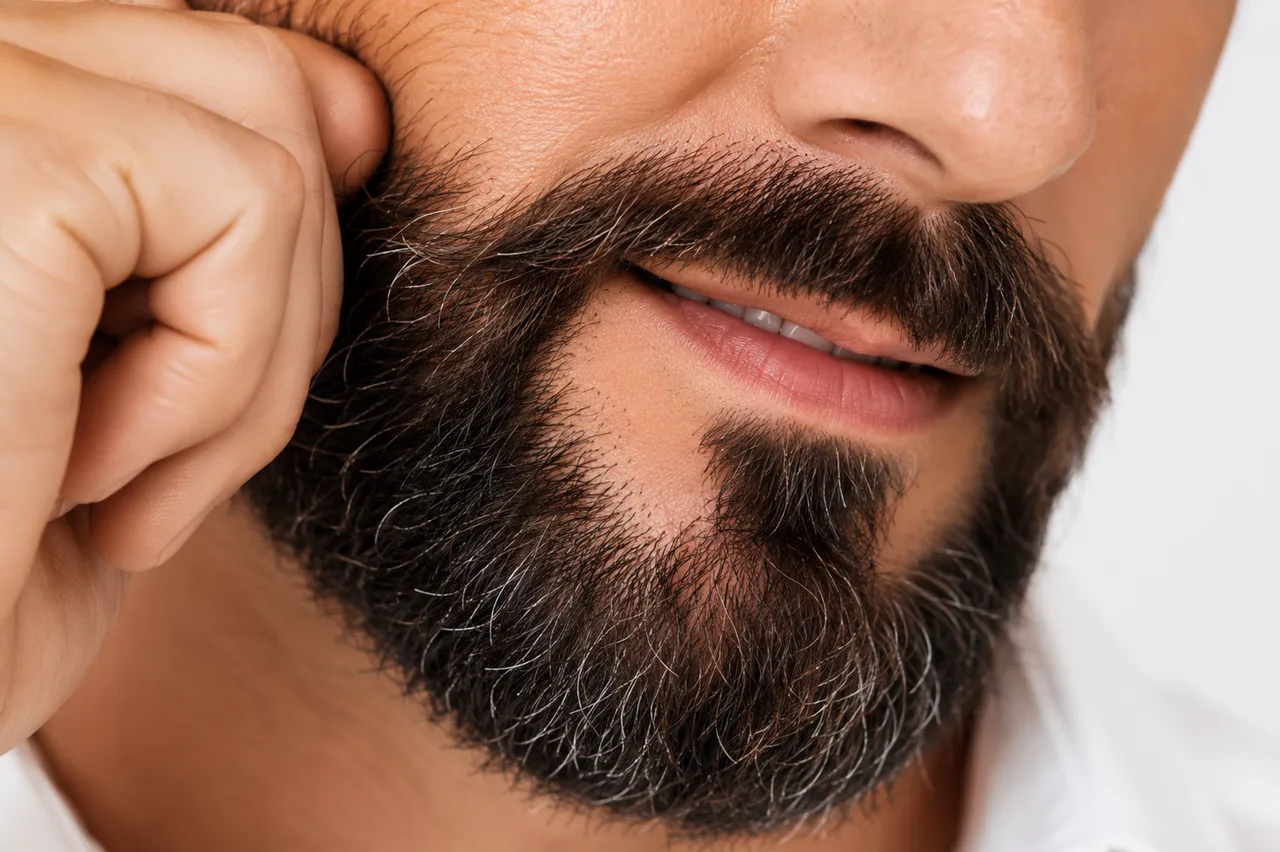
Patchy cheeks, thin jawlines, gaps in the moustache and beard scarring are filled with grafts placed at the sharp acute angle facial hair grows at — a different implantation discipline from the scalp.
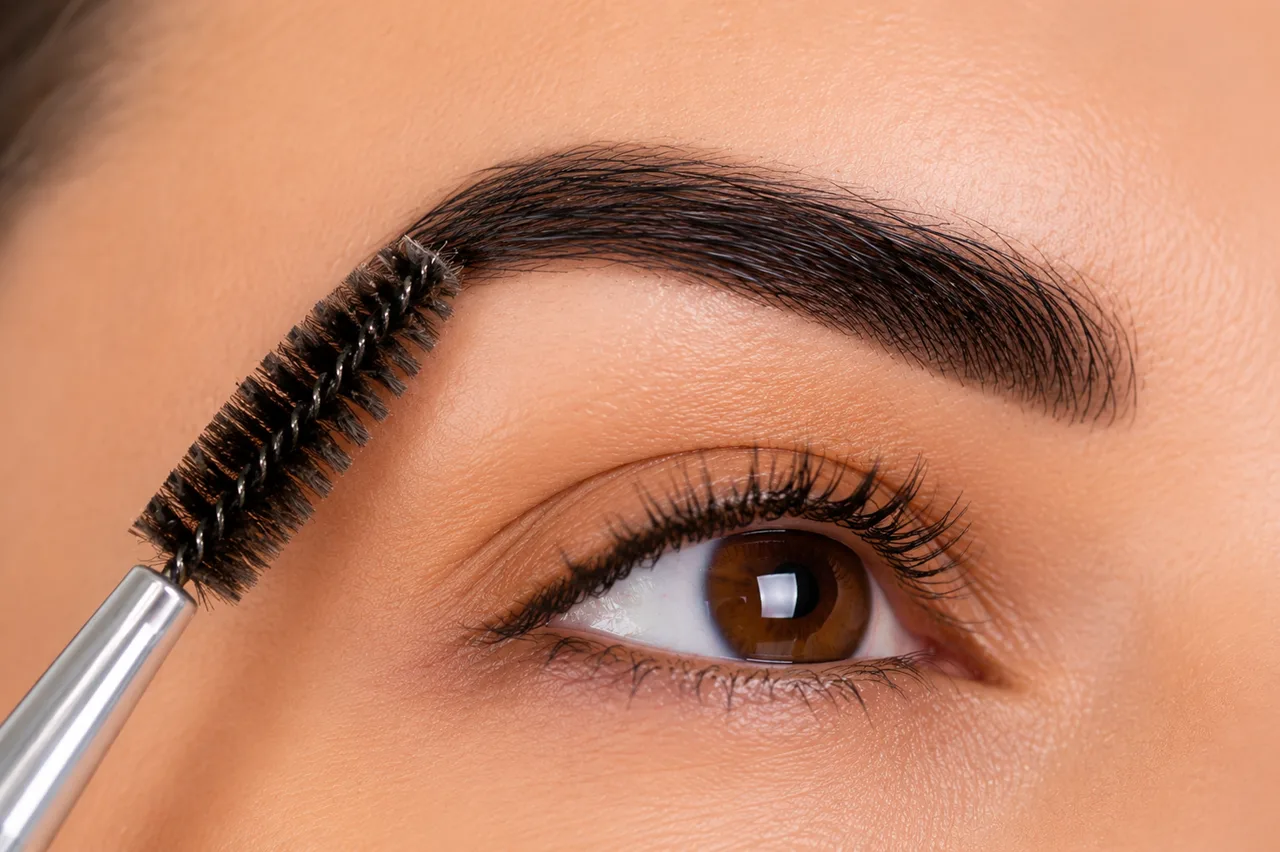
Over-plucked, sparse, scarred or asymmetric brows are rebuilt one hair at a time, with each graft laid almost flat to the skin and angled to follow the natural sweep of the brow.
Your Journey
Consultation & Assessment
A specialist examines your donor area under magnification, measures density and hair calibre, grades your hair loss pattern and reviews your medical history and goals to confirm which techniques are viable for you.
Technique Selection & Hairline Design
Your hairline is drawn on your own face and adjusted with you in the mirror. Graft numbers are calculated per zone, and the technique — or combination — is confirmed and quoted.
The Procedure
Performed under local anaesthetic in a DHA-licensed surgical suite. Most sessions run six to eight hours with breaks, and you remain awake and comfortable throughout.
Recovery & Shedding Phase
Scabs clear within seven to ten days. Transplanted hairs shed between weeks two and six — this is expected and temporary, and the follicle beneath remains in place.
Progressive Natural Results
New growth appears from month three to four, thickens through months six to nine, and reaches final density and texture at twelve to eighteen months.
Exceptional hair transplantation requires more than technical skill. It requires an artistic understanding of facial aesthetics, hair growth patterns and long-term natural appearance.
Because we perform all ten techniques, we have no commercial reason to steer you toward one. Your donor density, scalp laxity, hair calibre, hair loss stage and downtime tolerance decide the plan — and the plan is explained to you before anything is booked.
Every hairline is individually designed according to facial structure, age, symmetry and natural proportions. We design for the face you will have at fifty, not only the one in the mirror today, so the result ages with you instead of against you.
Every hairline is individually designed according to facial structure, age, symmetry and natural proportions. We design for the face you will have at fifty, not only the one in the mirror today, so the result ages with you instead of against you.
Grafts are placed to mimic natural growth — correct angulation, correct direction, correct graft-size gradient from single hairs at the front edge to multi-hair units behind. This is what separates an undetectable transplant from an obvious one.
Not every patient is a candidate, and not every technique suits every patient. Where a technique carries real limitations — as artificial fibre implantation and regenerative therapies do — we say so in writing before you decide.
Not every patient is a candidate, and not every technique suits every patient. Where a technique carries real limitations — as artificial fibre implantation and regenerative therapies do — we say so in writing before you decide.
Washing protocol, medication guidance, shedding-phase expectations and scheduled reviews at day 10, month 3, month 6 and month 12. Growth is monitored, not assumed.
A successful hair transplant is not measured by the number of grafts implanted.
It is measured by how naturally those grafts blend with your existing features.
Our approach focuses on:
The goal is not to look like someone else.
The goal is to look like the best version of yourself.
Hair restoration is a journey. Following transplantation, new growth develops gradually as part of the natural hair growth cycle. As the transplanted follicles mature, patients experience progressive improvements in density, coverage, and overall appearance, resulting in a stronger and more youthful look that feels completely natural.
Hair Transplant


Hair Transplant


Compare
A quick orientation. Your consultation confirms the detail — but this is how the ten techniques differ at a glance.
Swipe to see more
| Best For | Shaving | Scarring | Downtime | |
|---|---|---|---|---|
| FUE | Most standard cases; hairline, crown, beard, brows | Usually required | Tiny dot scars | 7–10 days |
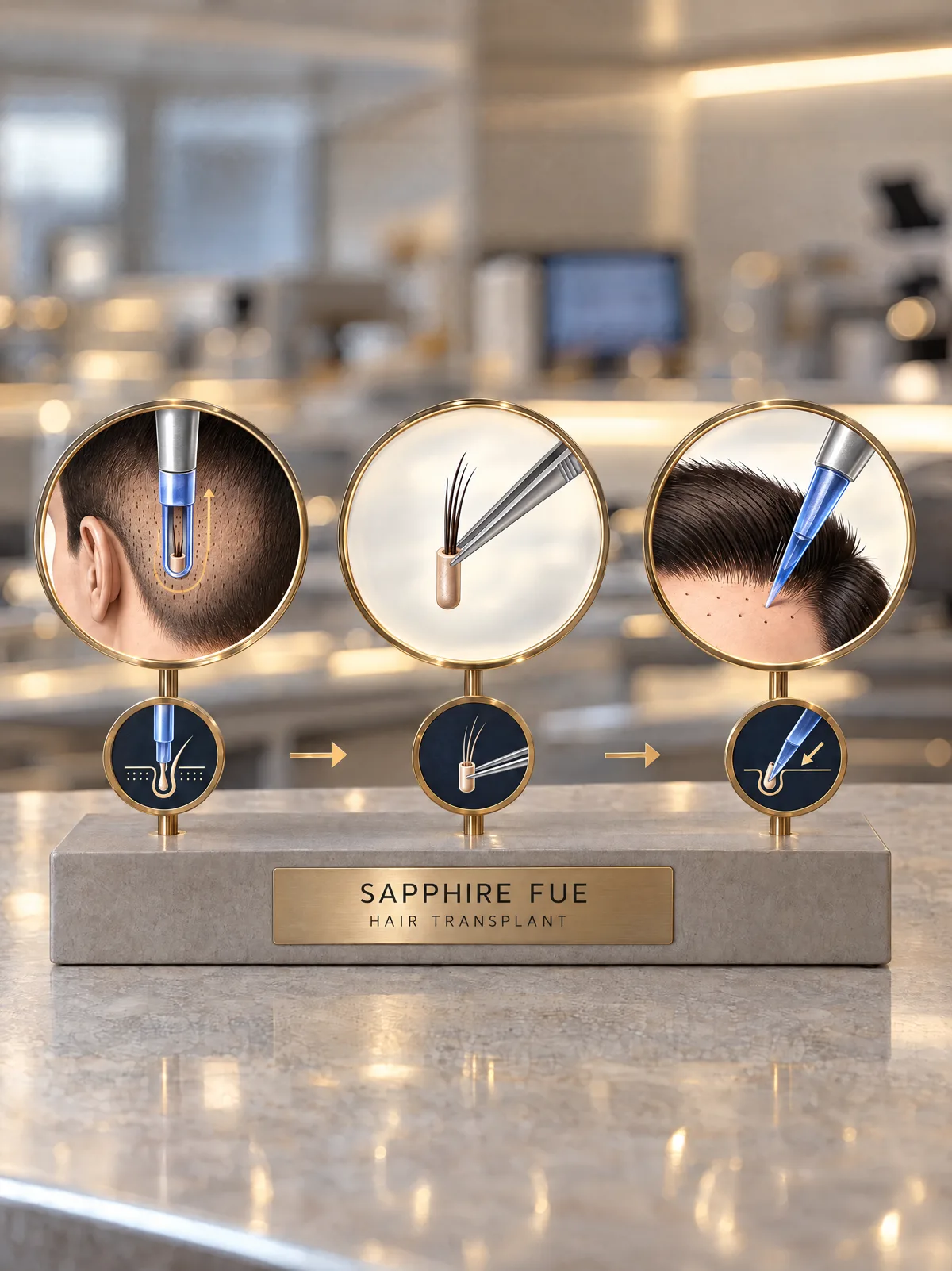
| Sapphire FUE | Dense packing with faster, cleaner healing | Usually required | Tiny dot scars | 5–8 days |
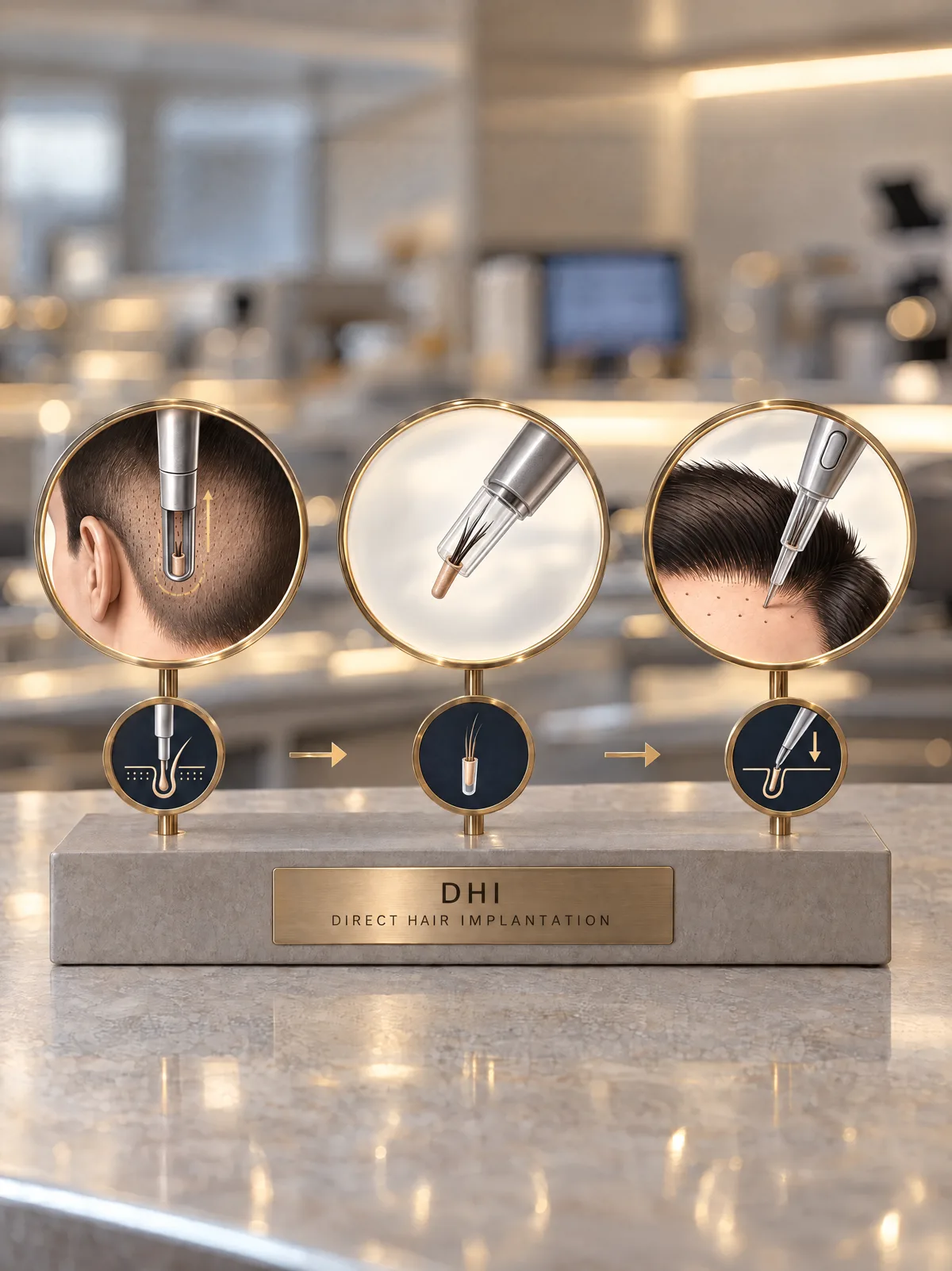
| DHI | Hairlines, eyebrows, unshaven and precision work | Partial or none | Tiny dot scars | 5–8 days |
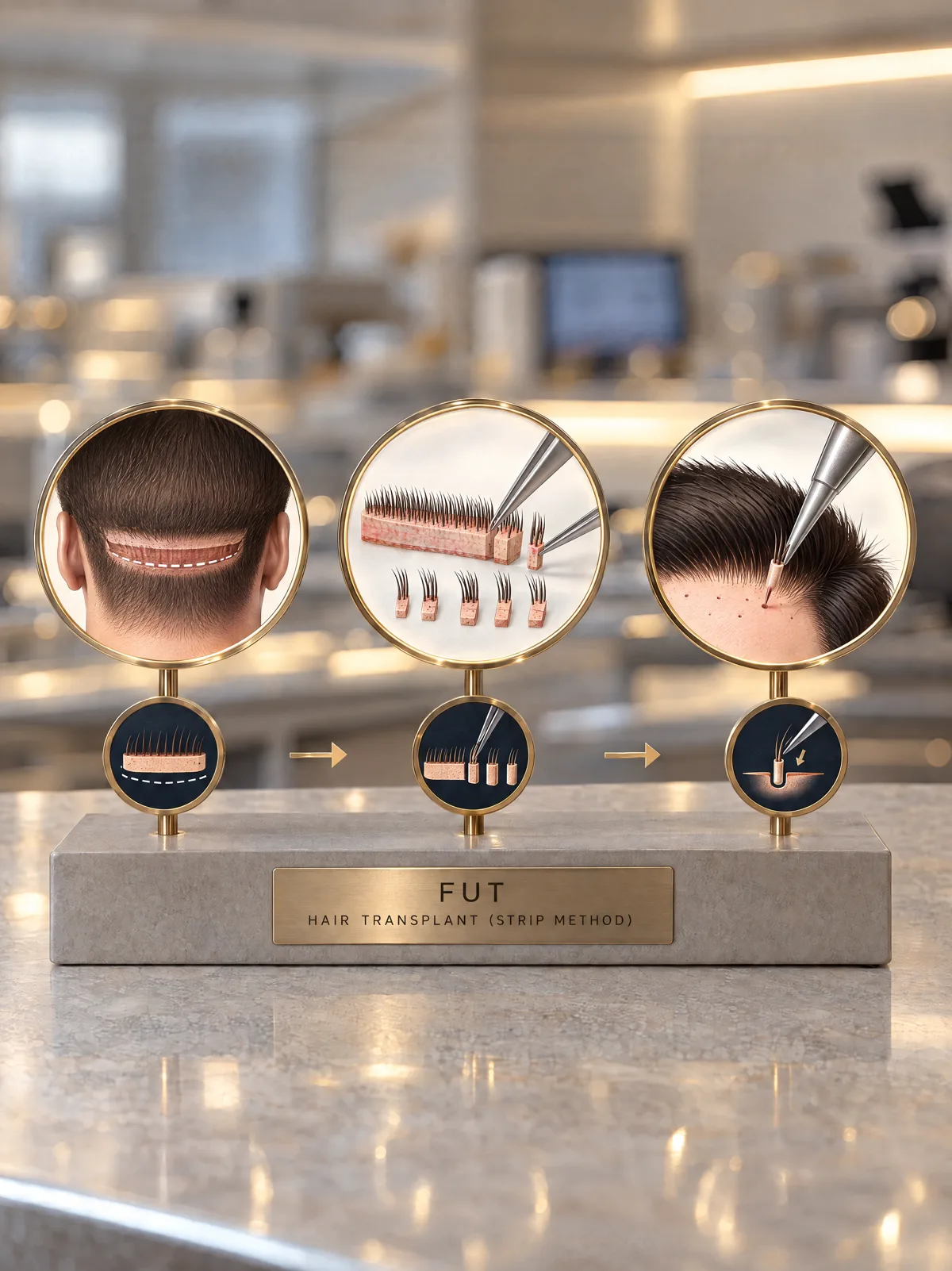
| FUT (Strip) | Very large sessions; strong donor, long hair | Donor strip only | Fine linear scar | 10–14 days |
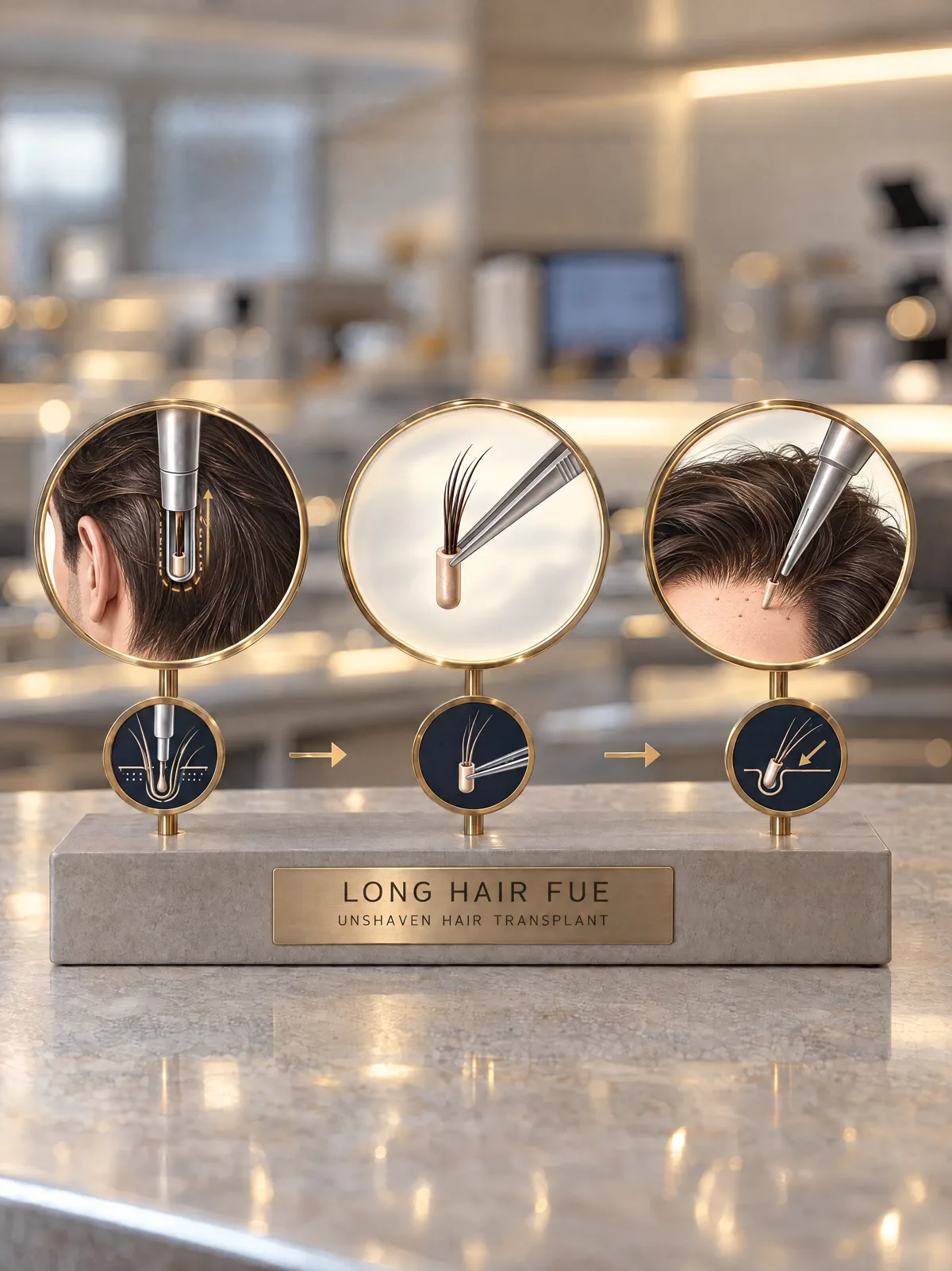
| Long Hair FUE | Discretion — no visible sign you had surgery | None | Tiny dot scars | 3–7 days |
| Body Hair Transplant | Depleted scalp donor; extra volume | Donor site only | Tiny dot scars | 7–10 days |
| Scar Revision | Strip scars, burns, surgical and accident scars | Localised | Minimal | 7–10 days |
| Biofibre | No viable donor; immediate cosmetic density | None | Minimal | 2–5 days |
| Stem Cell-Assisted | Supporting graft survival and native hair | None | None | 1–2 days |
| Percutaneous | Maximum naturalness and graft grip in fine work | Varies by pairing | Tiny dot scars | 5–8 days |
Ten. FUE, Sapphire FUE, DHI, FUT (strip method), Long Hair FUE, Body Hair Transplant, Scar Revision Hair Transplant, Biofibre artificial hair implantation, Stem Cell-Assisted Hair Restoration and the Percutaneous technique. All ten can be applied to the scalp, and most can be applied to the beard and eyebrows.
There is no single best technique — there is a best technique for your donor area and your goal. FUE and Sapphire FUE suit most standard cases. DHI and percutaneous placement excel in hairlines and eyebrows. FUT delivers the highest graft yield in one session. Long Hair FUE is chosen for discretion. Body hair and scar revision solve specific problems that standard FUE cannot.
Yes. Every hair restoration journey at Elora begins with a complimentary consultation and scalp assessment, including donor density measurement and a written technique recommendation. There is no obligation to book a procedure.
Naturalness comes from three things: hairline design suited to your face and age, correct graft angulation and direction, and a proper density gradient using single-hair grafts at the front edge. Every technique we perform is executed against those three standards.
Yes. Long Hair FUE (unshaven FUE) leaves both donor and recipient hair at full length, and DHI can often be performed with only partial shaving. Both take longer and typically handle fewer grafts per session than shaven FUE, which is reflected in planning and cost.
Transplanted hairs shed between weeks two and six, new growth begins around month three to four, and density builds through months six to nine. Final texture and density are assessed at twelve to eighteen months.
Follicles taken from the permanent donor zone at the back and sides of the scalp are genetically resistant to the hormone that causes pattern hair loss, so they continue growing for life. Your surrounding native hair can still thin, which is why long-term planning and medical maintenance form part of the treatment plan.
Frequently, yes — and it is often the better plan. Sapphire channels with DHI placement in the hairline, scalp FUE supported by beard grafts in the crown, or scar revision combined with a density session are all routine combinations at Elora.
Hair transplant Dubai
Elora Aesthetic Polyclinic in Dubai performs ten hair transplant techniques: FUE, Sapphire FUE, DHI, FUT (strip), Long Hair FUE, Body Hair Transplant, Scar Revision Hair Transplant, Biofibre artificial hair implantation, Stem Cell-Assisted Hair Restoration and the Percutaneous technique. Each can be applied to the scalp, beard or eyebrows, and the right choice depends on donor supply, the area being treated and how much downtime you can take. Consultations and procedures take place at our Dubai clinic on Al Wasl Road in Al Bada'a — minutes from Jumeirah and City Walk, about 10 minutes from Downtown Dubai.
Every Elora hair restoration journey begins with a complimentary consultation and scalp assessment. Our specialists evaluate your donor area, hair loss pattern, facial proportions and long-term goals, then recommend the technique — or combination of techniques — that will give you the most natural result.